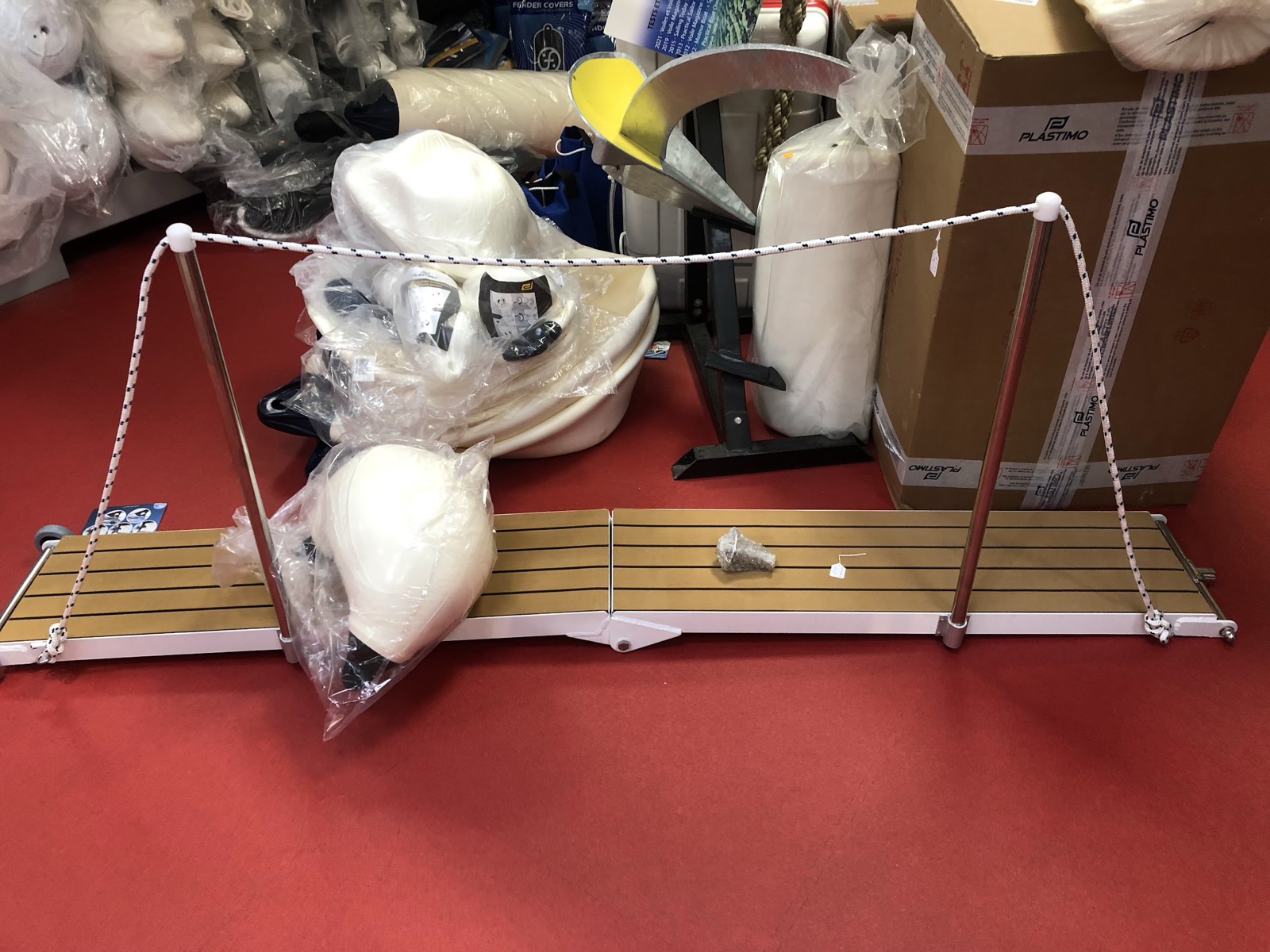
As it got closer to launch day, we started working on other items we would like/need to be ready for sailing:
- Helm roof
- Vinyl wrap
- Dinghy and outboard
- Boat gear
- Safety Equipment
- Communications
- Appliances
- Tools
- Water toys
- Household items (bedding, kitchenware, etc)
Let’s go through each of these in turn…
Helm roof
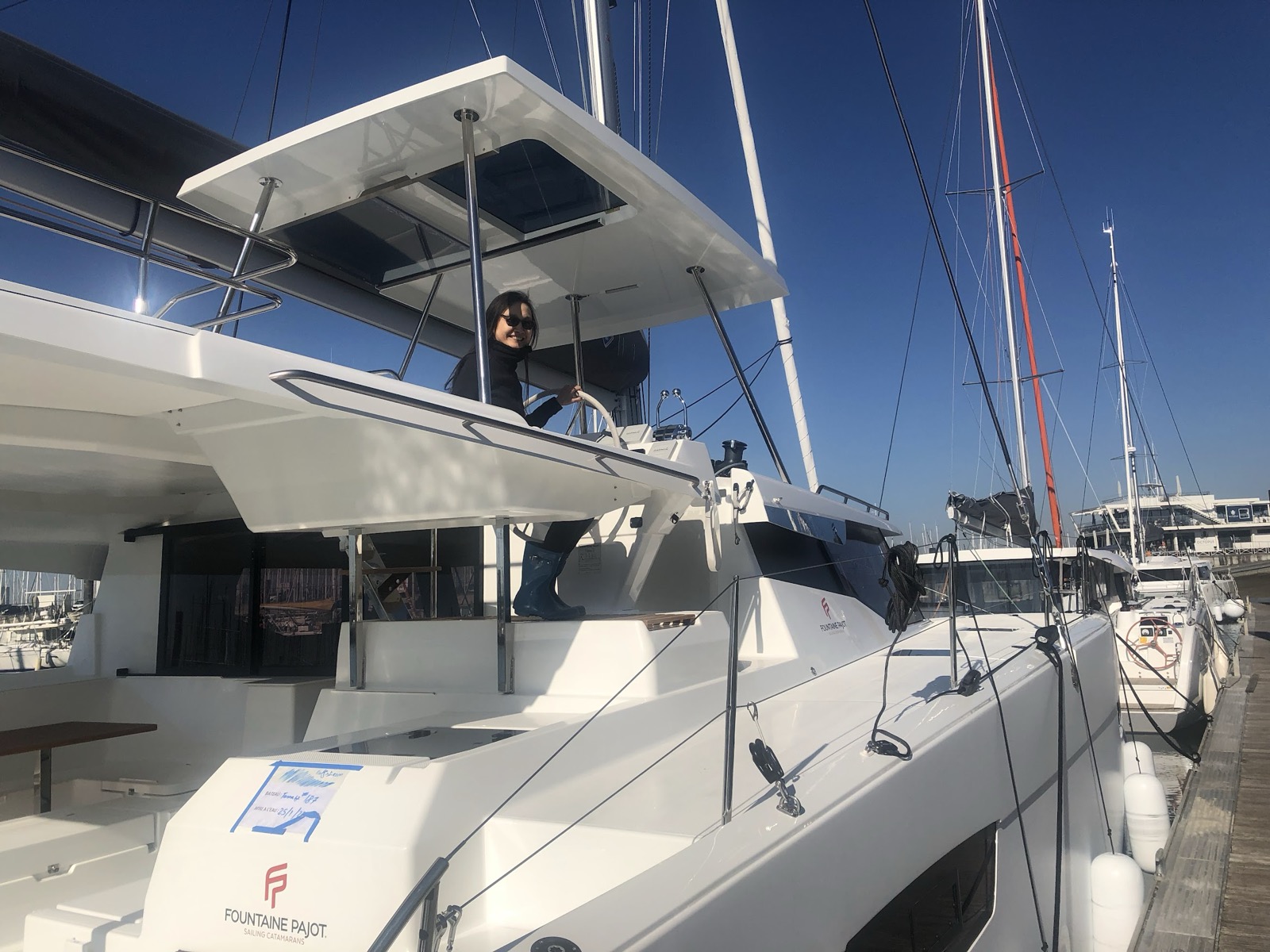
The Tanna has an option for a fabric helm roof, but our preference was for a solid fiberglass roof. We had heard from other sailors that a small Czech company SeaConcept had done a great job on designing a helm roof specifically for the Tanna. It needs several months lead time, but I ordered it in Dec 2022 and was ready in time for our March 2023 launching. Uchimata (the same outfit that does the prep for FP) did the installation. Total cost was: $13,000
Vinyl wrap
Although some boat owners regularly wax their hulls (a lot of work!) another option is a protective vinyl wrap; basically a thin plastic sheet that overlays the hull. The downside is the wrap is fragile and will get torn and discolored in a few years, so will need to be regularly replaced. In the meantime though, it’s maintenance-free and in addition it’s easy to add colors or a graphic to the wrap.
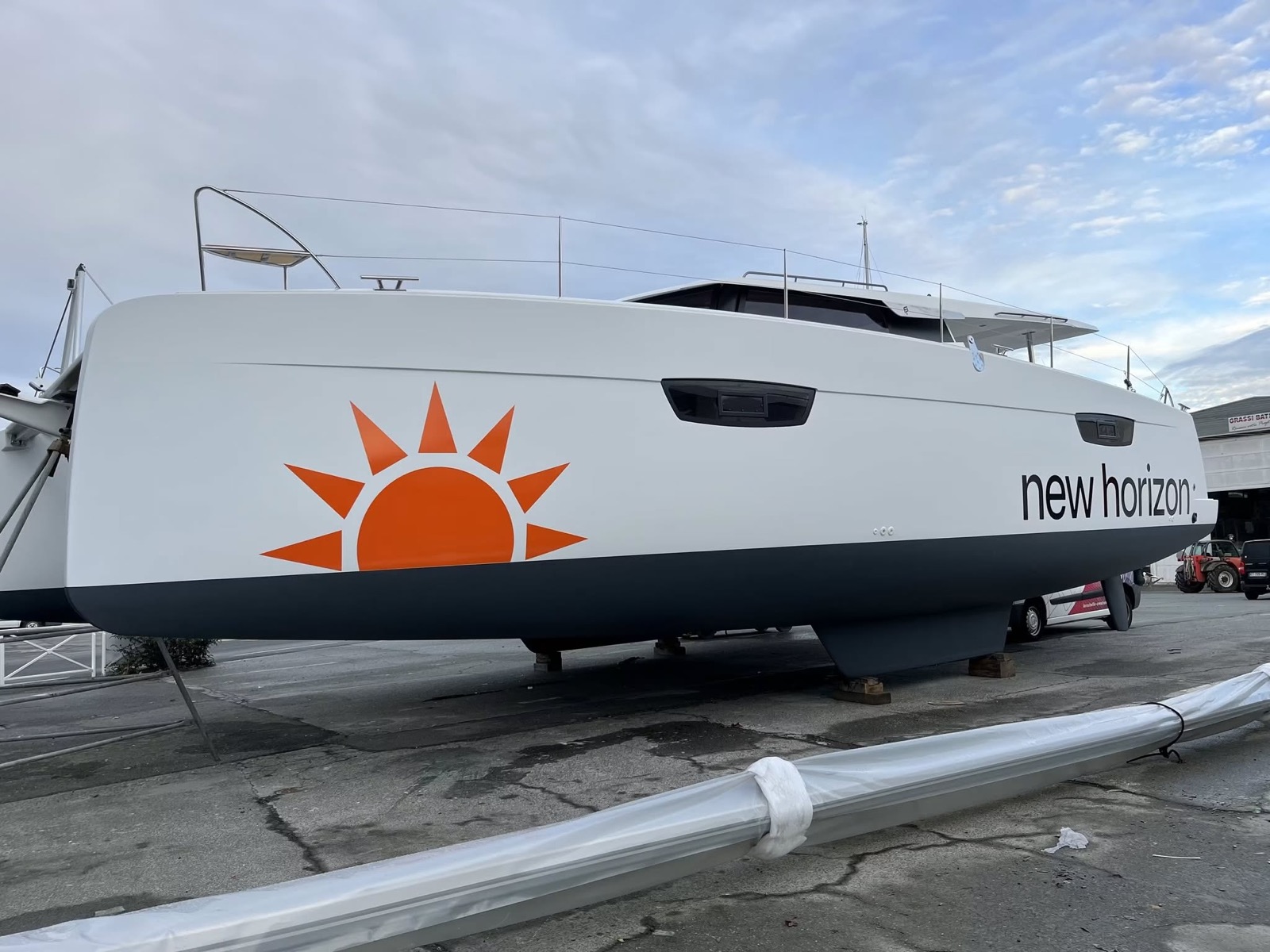
For New Horizon’s wrap, I got in contact with Elodie at La Rochelle Creation in La Rochelle and we worked through a few iterations on the dimensions and design of the wrap. Installing the wrap requires the boat be hauled out, but we were able to find a time after New Horizon had left the factory but before it had been placed in the water for the wrapping to be done.
In the meantime, I had applied my Python skills to create a rising sun design for the wrap - a rising sun logo for the bow. My view is that a simpler design works better than a more complicated one that can’t be seen clearly at any distance. I also requested a large “New Horizon” text along the sides of the boat (just in case I have any trouble identifying my own boat!).
Dinghy and outboard
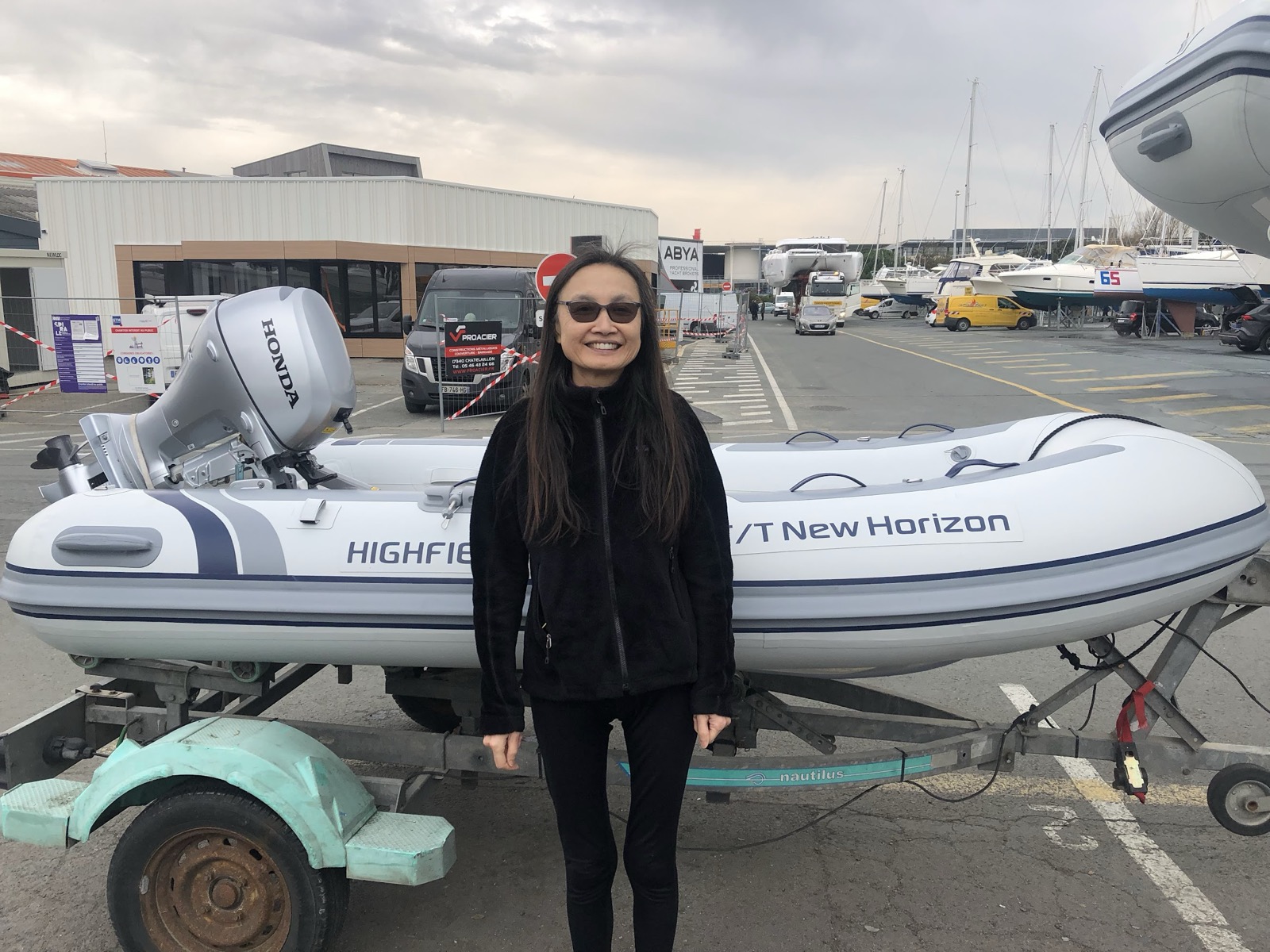
For cruisers, a dinghy is not an optional purchase - it’s basically the equivalent of a car for land dwellers. The dinghy will be how you get from your anchorage to your favorite beach bar, store for groceries, or explore a shallow cove. Most cruisers use a RIB - a dinghy that has an aluminum V-shaped hull with inflated tubes on the sides. The aluminum hull enables it to plane over the water so you can take longer trips than would be possible otherwise.
We’ve seen most cruisers have Highfield dinghies, so we reckoned it couldn’t be bad. The one question we had is what size to get. A smaller model is easier to lift up onto the beach or crank up on the davits. A larger model can carry more passengers and/or cargo. We ended up getting the Highfield 310 (3.1 meters). It’s not the largest one that would fit on our davits, but could easily carry five people and their gear.
The Highfield has an option for a center console (where you have a steering wheel), but that adds weight and takes up space, so we went with the basic tiller steering (even without the console, the weight was 145 pounds). The other option to consider was the material for the tubes with a choice of PVC or Hypalon. PVC is cheaper but degrades more quickly in the sun, so we opted for the longer lasting Hypalon.
For the outboard, the only model available (due to Covid supply issues) was a Honda 15 hp with electric starter (electric start is great!) which came with a 3 gallon gas tank. Previously we had a Torqeedo electric outboard, which was nice from a convenience and weight point of view, but was a bit too under-powered to be practical. The Honda did add another 124 pounds of weight, so now we have a total of 270 lbs. That was practically impossible for us to push up the beach unfortunately.
We purchased the dinghy from Pretty Nautique which is based in La Rochelle (where New Horizon was built). We had worked out all the arrangements from Seattle. It was delivered the day after we arrived in La Rochelle by Bruno (the owner of Pretty Nautique), so that was extremely convenient for us. The cost broke down to:
- Highfield 310 Hypalon RIB - $5,400
- Honda 15 hp outboard w/ electric start - $4,280
- Dealer prep/misc - $150
One nice thing is that Bruno set up the paperwork so that we didn’t have to pay VAT on the purchase. Since this was equipment for a yacht leaving France, it’s possible to avoid this extra 20% charge.
Boat gear
We got quite a few other items for the boat, that seemed useful:
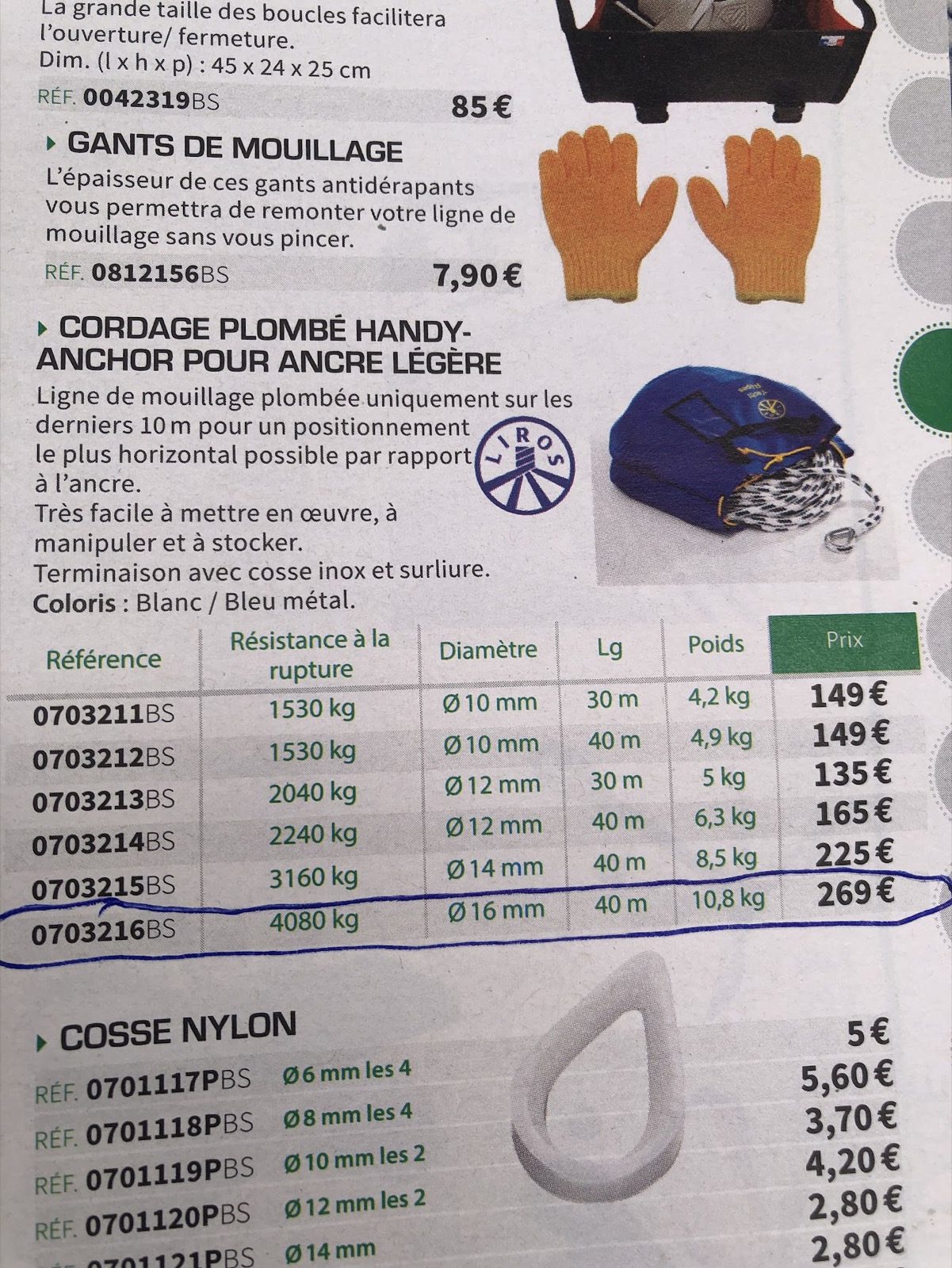
- Spare anchor and line
- Additional fenders
- Fabric fender covers
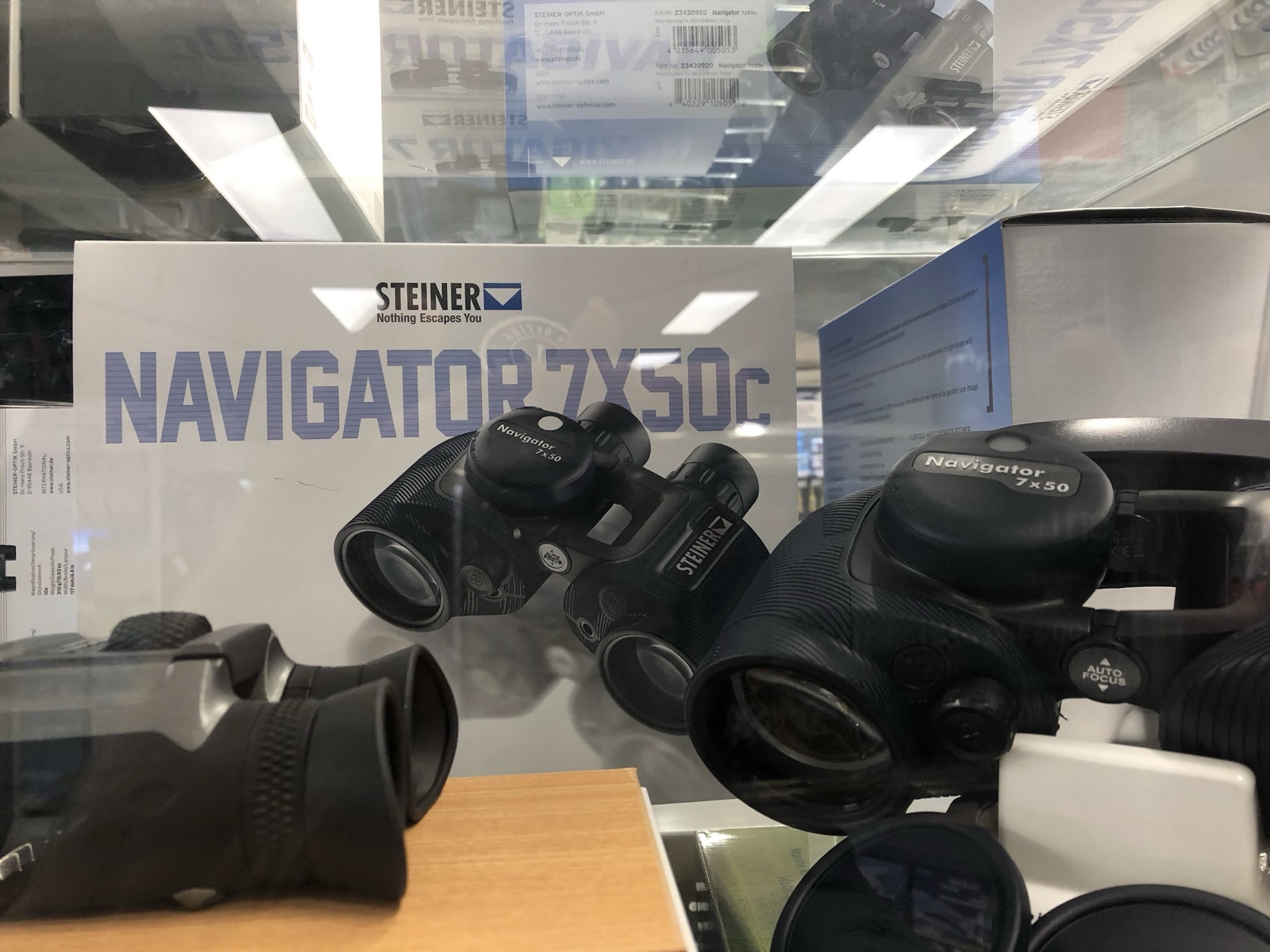
- Binoculars - got an expensive pair but we use it all the time
- Range scope - useful for knowing exactly how far away an object is
- Replacement lines for main halyard, topping lift, jib halyard, etc.
- Water filter - for filtering water from the dock
- Cleaning supplies for deck, teak, stainless, etc.
Safety Equipment
Safety equipment is the one item you hope to never use, still you don’t want to be without it when something bad happens.
We outfitted New Horizon with the following safety items, all purchased in La Rochelle (except the life raft in 2024 and the crash pump in 2025).
- Flares - Pyrotechnic flares in different colors for emergency signaling
- LED emergency signal light
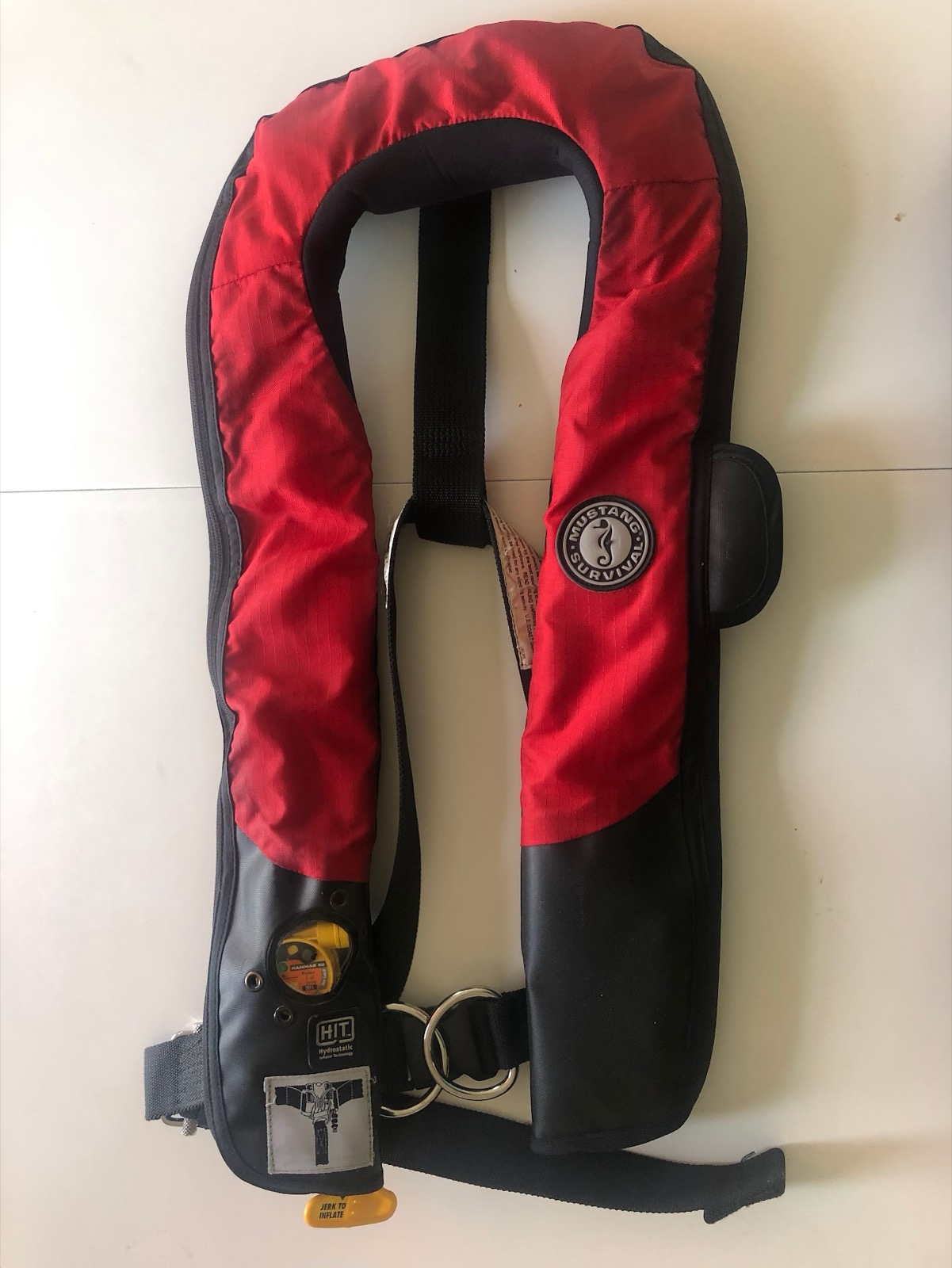
- 6 Type I life jackets (PFD) - we store 2 each in the drawer under the beds
- 2 Type II life jackets with tethers - more comfortable to wear than the type I, but won’t keep you face up if unconscious
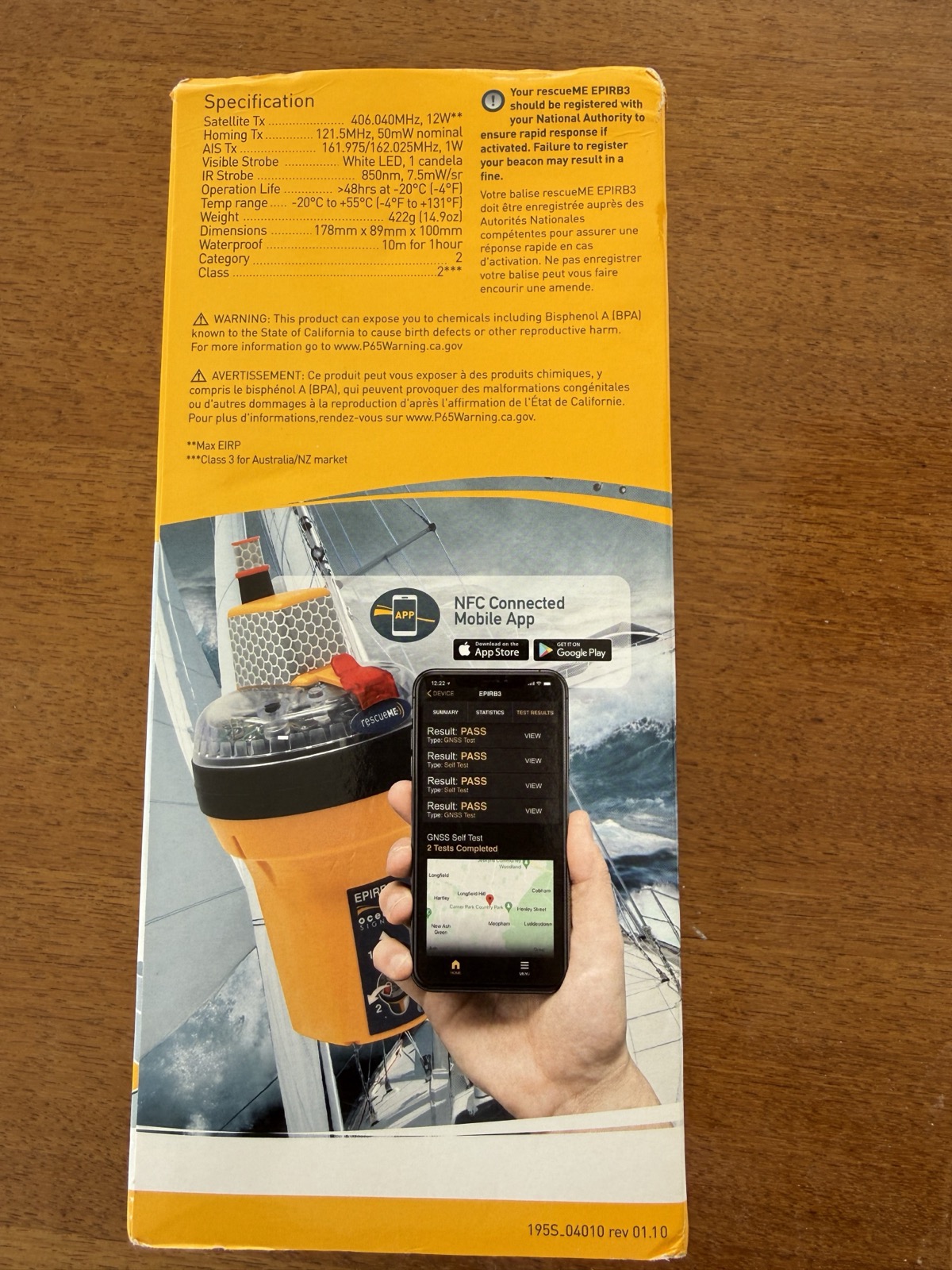
- EPIRB - Ocean Signal EPIRB3
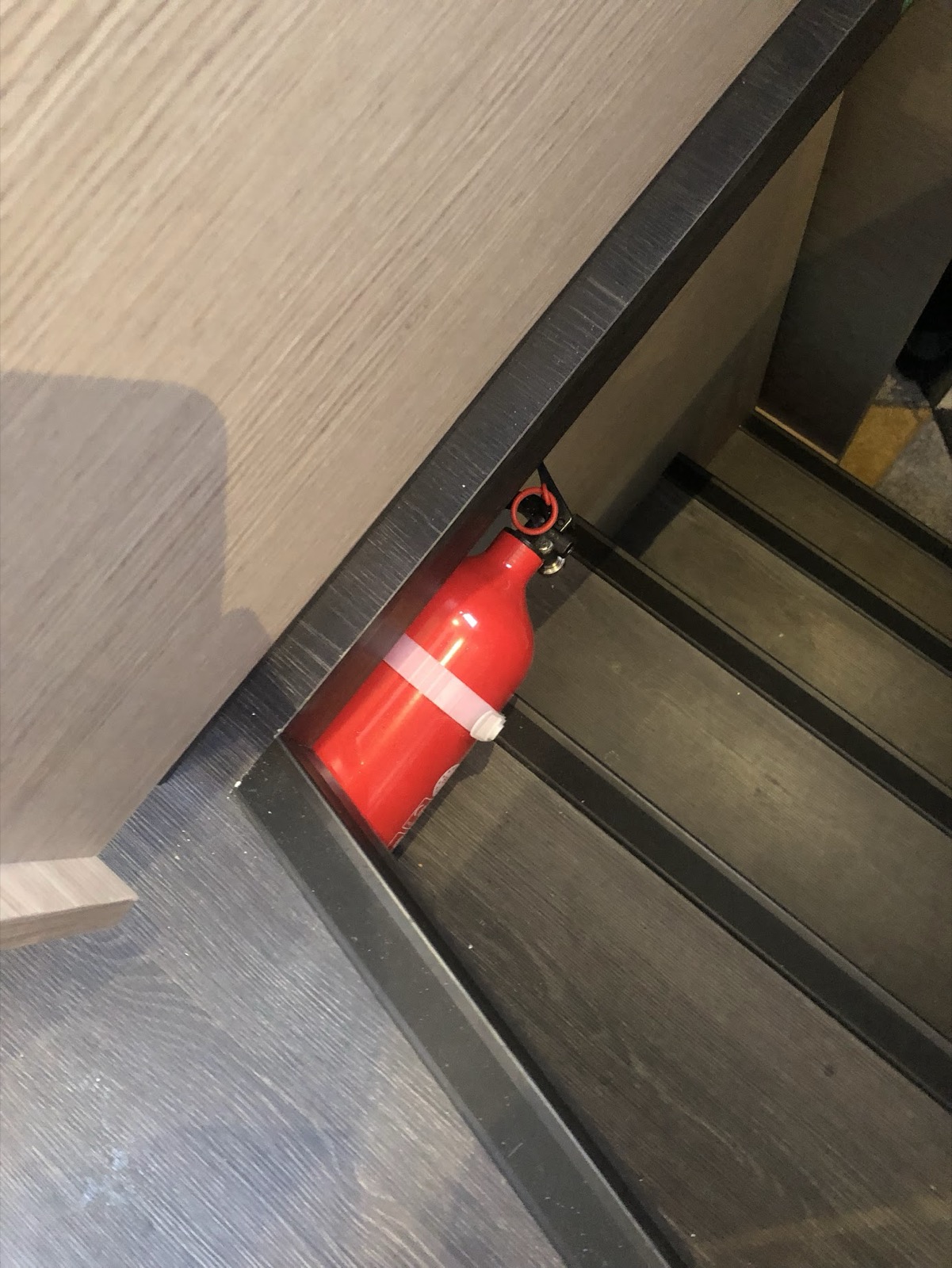
- 4 Fire Extinguishers - Type B, one in each cabin and one in saloon
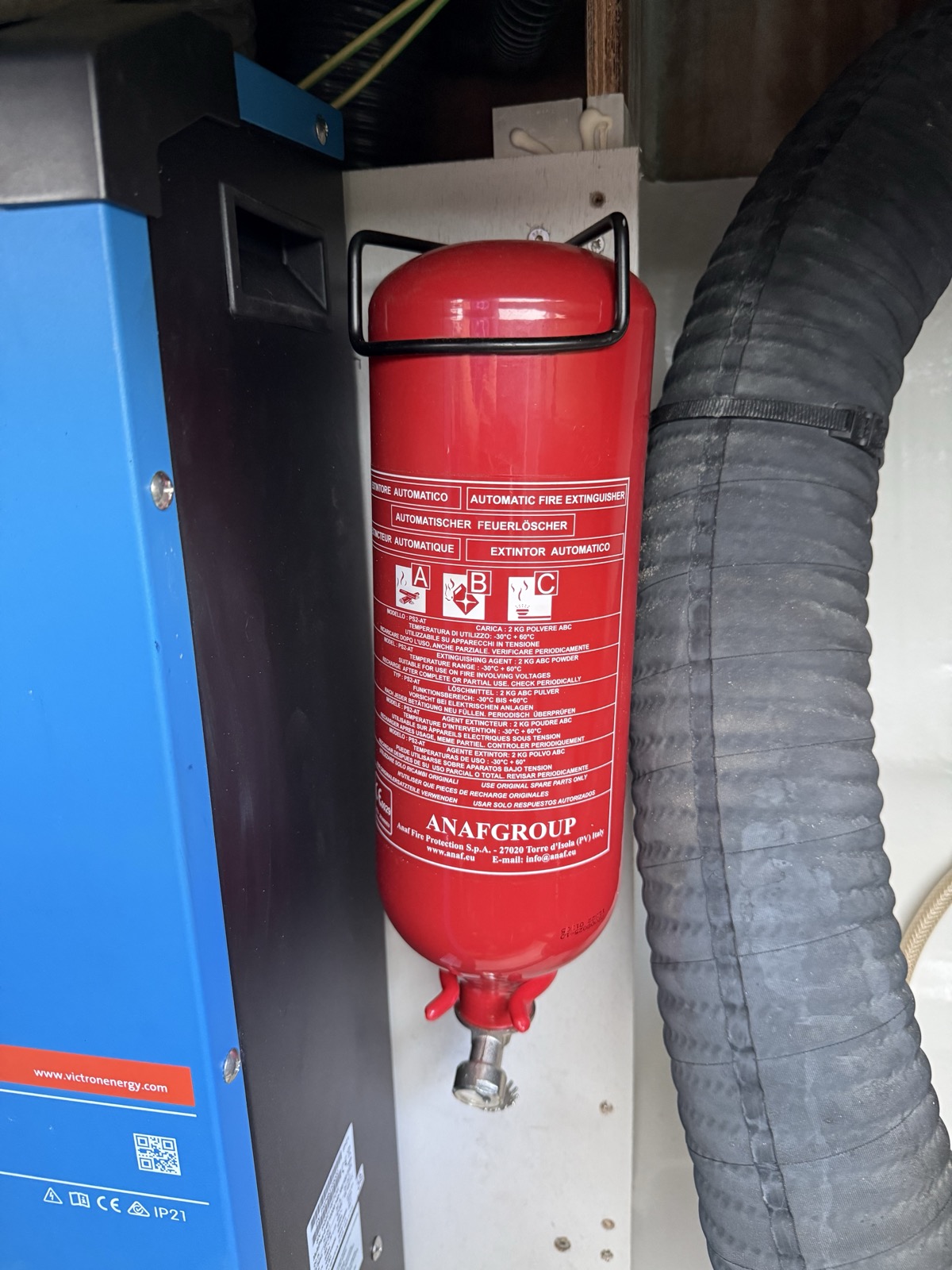
- 2 Halogen Fire Extinguishers - Engine Room auto deploy Extinguishers
- Fire Blanket
- 4 Smoke/CO2 detectors
- Ditch Bag (actually a re-purposed dry bag)
- Jacklines - safety lines rigged along the deck that you can clip into (never used!)
- Rescue Buoy - Plastimo buoy with a line
- Crash Pump - 220v portable high capacity pump
- Life Raft - 6 person OceanSafety raft stored under helm stairs
- Medical Kit - first aid kit and medicines (e.g. antibiotics)
We each have self-inflating life jackets with tethers (the tether is useful to connect yourself to the boat so you can’t fall overboard). They are not uncomfortable, but in truth we rarely use them. Unlike with a monohull, the catamaran sails flat and it would be a bit of a challenge to fall overboard. On some boats it’s possible that the boom or sail could knock someone off the boat, but the way the Tanna is setup the boom and mainsheet don’t occupy the cockpit or helm station space, so that’s not a problem. Similarly, unless we are planning to sail into a hurricane, I don’t imagine the jacklines being very useful.
The EPIRB is the most useful device to have if you are forced to abandon ship - when activated it signals to a satellite service that relays the distress signal to the appropriate responder regardless of where in the world you happen to be. By contrast the VHF radio is only useful if you are somewhere where the coast guard can pick up your message (max 15-25 nm). If we are mid-ocean and have a serious problem (but not yet to the point we want to abandon ship), Starlink is very useful to have. Unlike with the EPIRB, you can actually converse with your rescuers to describe the particular problem (mast fell down, medical condition, etc.). Starlink requires power and is not 100% reliable, so it’s still important to have an EPIRB if you’ll be sailing offshore.
We actually had a bit of a challenge with the EPIRB though - it was bought in the US and brought to France by plane. However to register the EPIRB (so rescuers can know which boat the EPIRB id corresponds to) in France requires an EU-bought EPIRB. After some back and forth with the OceanSafety people, we were able to get the EPIRB region adjusted for EU and properly registered.
I think fire is more of a danger than the boat sinking and the engine compartments are the most likely source, so I installed a Halogen extinguisher in each engine bay. These are triggered automatically if the temperature reaches a high enough level. For the saloon and cabin we have 4 portable extinguishers and also a fire blanket for use in case meal prep gets out of control.
The Tanna comes with 4 automatic bilge pumps (one in each hull and each engine bay), and a manual pump. One nice feature of the Tanna is that there is a watertight bulkhead between the engine bay and the cabin, so a leak in one (say an orca tears out your rudder) won’t affect the entire boat. The bilge pumps run automatically if they detect flooding, but their capacity is quite modest. The crash pump is a high capacity pump that you can carry to the problem area and hopefully keep ahead of the flooding at least long enough to stop or slow it down.
The life raft we actually purchased the next year, but it would have been better to just bite the bullet and get it with the boat. It’s very unlikely we’ll ever need to use it, but if you do need it, you’ll be glad to have it. If New Horizon was holed, it most likely would remain more or less floating, so in most cases it would be better to stay with the boat rather than get into a small rubber raft. In case of fire though, it could be very important to quickly evacuate the boat and board the raft. There wasn’t an easy way to mount the raft on the stern (where it would be easiest to access in an emergency), so we opted to put it underneath the stairs that lead from the cockpit to the helm station.
Communications
Our Starlink dish (a gen2 model) was delivered to La Rochelle shortly after we arrived. It’s a true game changer for boating, giving cable internet speeds, at low cost, anywhere in the world. At first we just set it up on its stand in the foredeck. Later we had a custom stand made and screwed into the coach roof, with the cable snaking down to a locker in the cockpit. We had some bad luck with the cables at first, with them going bad and us needing to order a replacement from SpaceX. It could be that the bending and twisting to route the cable caused them to go bad.
We use the VHF mainly for communicating with marinas or bridge operators, but in an emergency it’s useful because, being a point-to-point device, your VHF call will reach anyone in range. So even if say there’s no coast guard station around, a nearby boater might hear your distress signal and come to your aid.
For trips to shore, we just use our cell phones. The T-Mobile plan we have gives unlimited data (albeit at a speed similar to your 1990s dialup modem), so we hadn’t had to deal with getting local SIM cards.
Appliances
Since we had configured the boat for 220 volts, it was easy enough to buy appliances at the local stores. Space is limited, but these items have earned their spot in the galley:
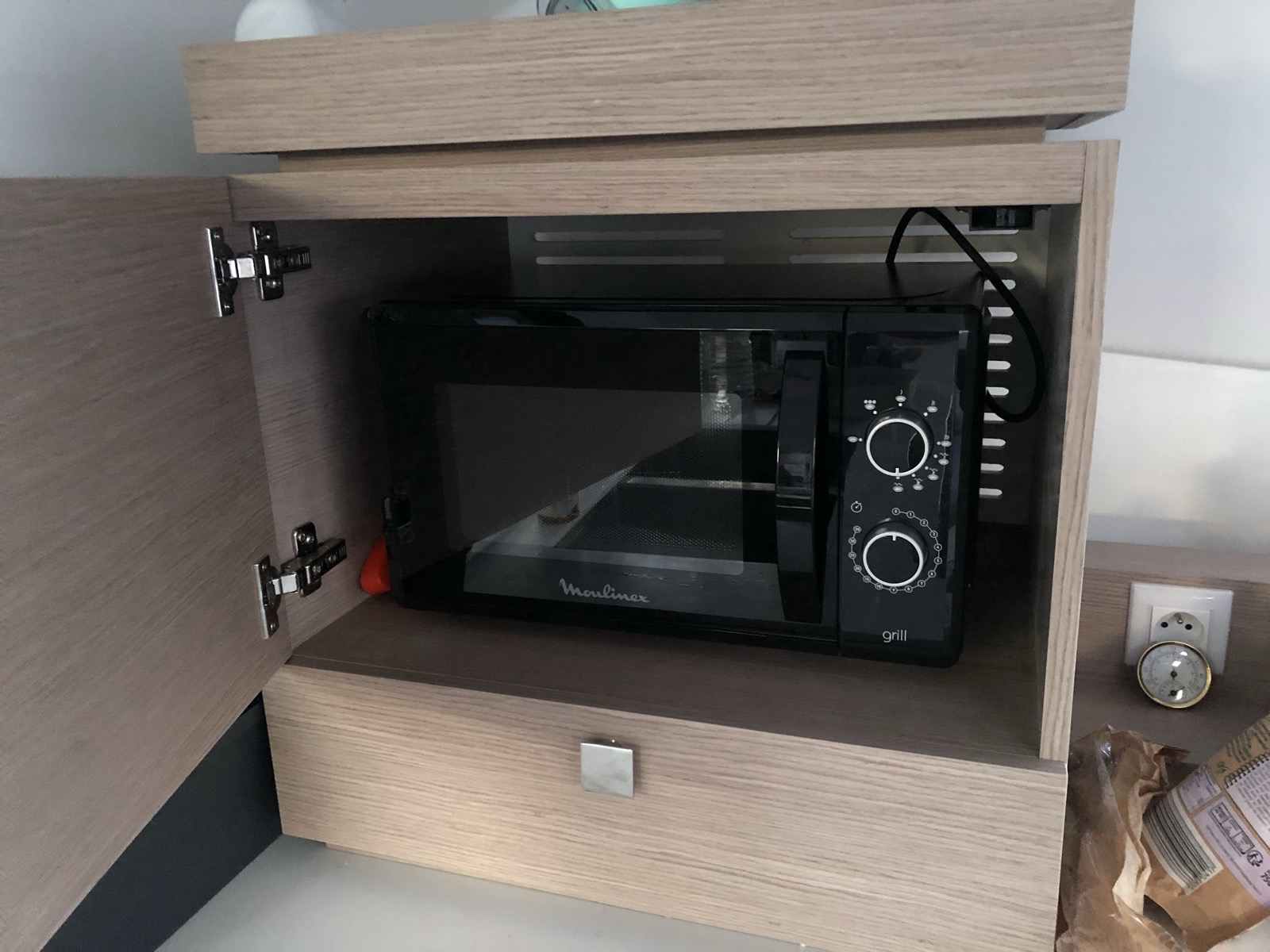
- Microwave - Moulinex compact unit, can microwave or grill
- Espresso machine - Jura Ena 4, just 11x18 inch base and 13 inch high
- Hot water kettle - more energy efficient than using a kettle on the cooktop
- Toaster - basic two slice model
- Bread machine - really nice to bake your own bread when there’s no bakery nearby
- Panini press - small one sandwich per press model
- Hand Vac - good for cleaning up as you go
Tools and spare parts
There’s always something needing fixing, so we got the following tools and spares:
- Tool kit
- Drill
- Heat gun
- Endoscope (for peering into hard to get to places)
- Oil Extractor pump
- Volvo spares: impeller, fan belt
- Anodes
- Fuses
- Screws, nuts, washers, other fasteners
- Autopilot spares
- Spare shackles, blocks
- Gelcoat (for fixing dings in the fiberglass)
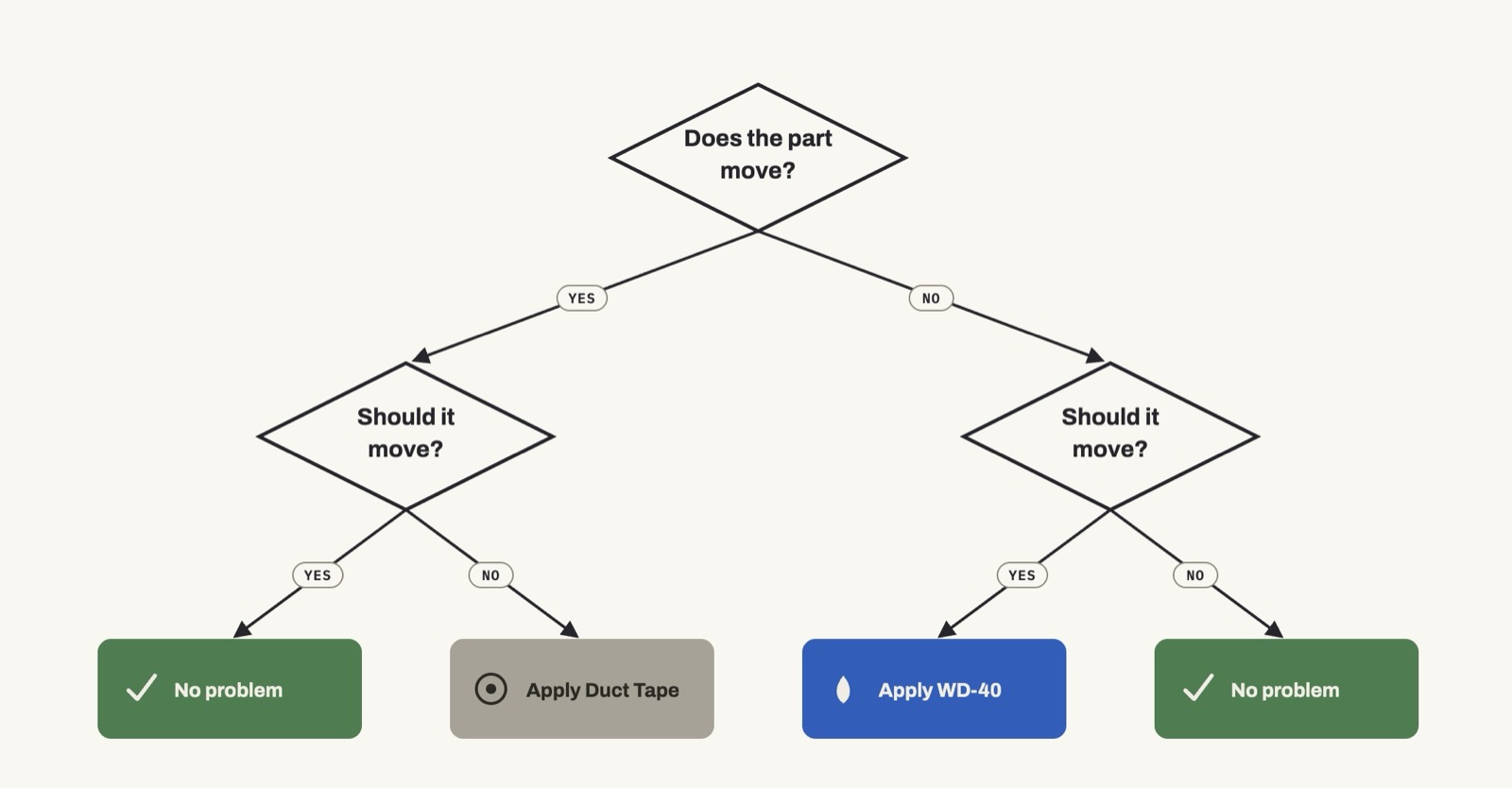
- Duct tape
- WD-40
There’s a lot more tools (my request for an angle grinder keeps getting rejected) and spares we could get but the above list has worked well for the most part.
Water Toys
We didn’t initially have a lot in this category, but over time have built up our collection of devices for having fun in the water:
- Fish rod and tackle (no fish caught to date)
- Crab pot, line, bouy (ditto)
- Mask, snorkel, and fins (several sets)
- 2 Inflatable paddle boards (purchased in the Shetland Islands for 100 pounds each, have been great)
Household items
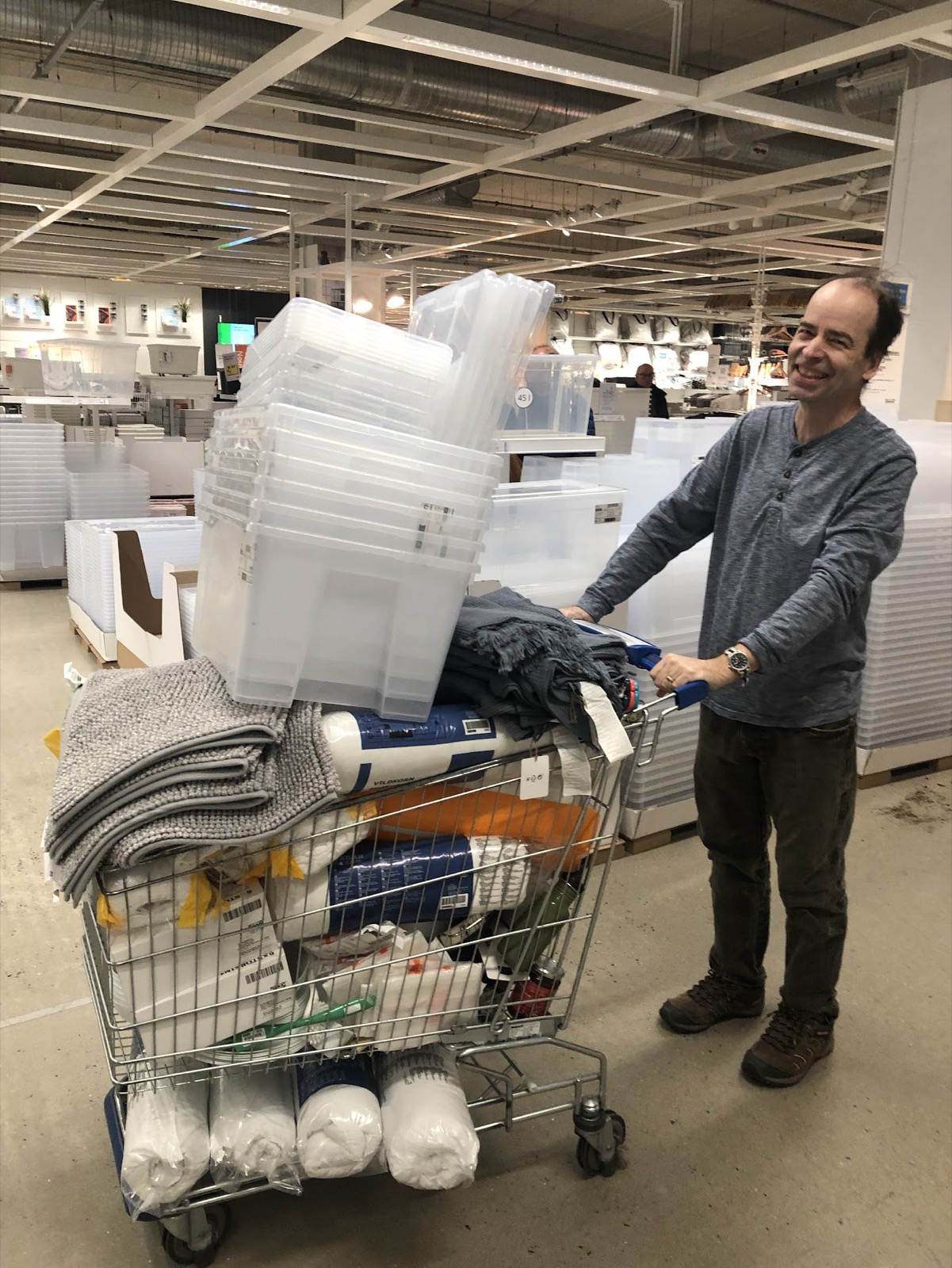
I won’t bother to itemize this, but it’s basically all the stuff you would need anywhere: pots, pans, dishes, bedding, etc. Cabinet space is limited, so we do have to be selective.
We had a few boxes of stuff that we wanted shipped from Seattle, so we used MyBaggage. It was very convenient as you just had to pack up your items, fill out a customs form, and then your boxes would be picked up and delivered internationally.
So that wraps up getting all the things we needed for cruising. Next is actually getting on the boat and working with Fountaine Pajot to make sure the vessel was ready to cast off.
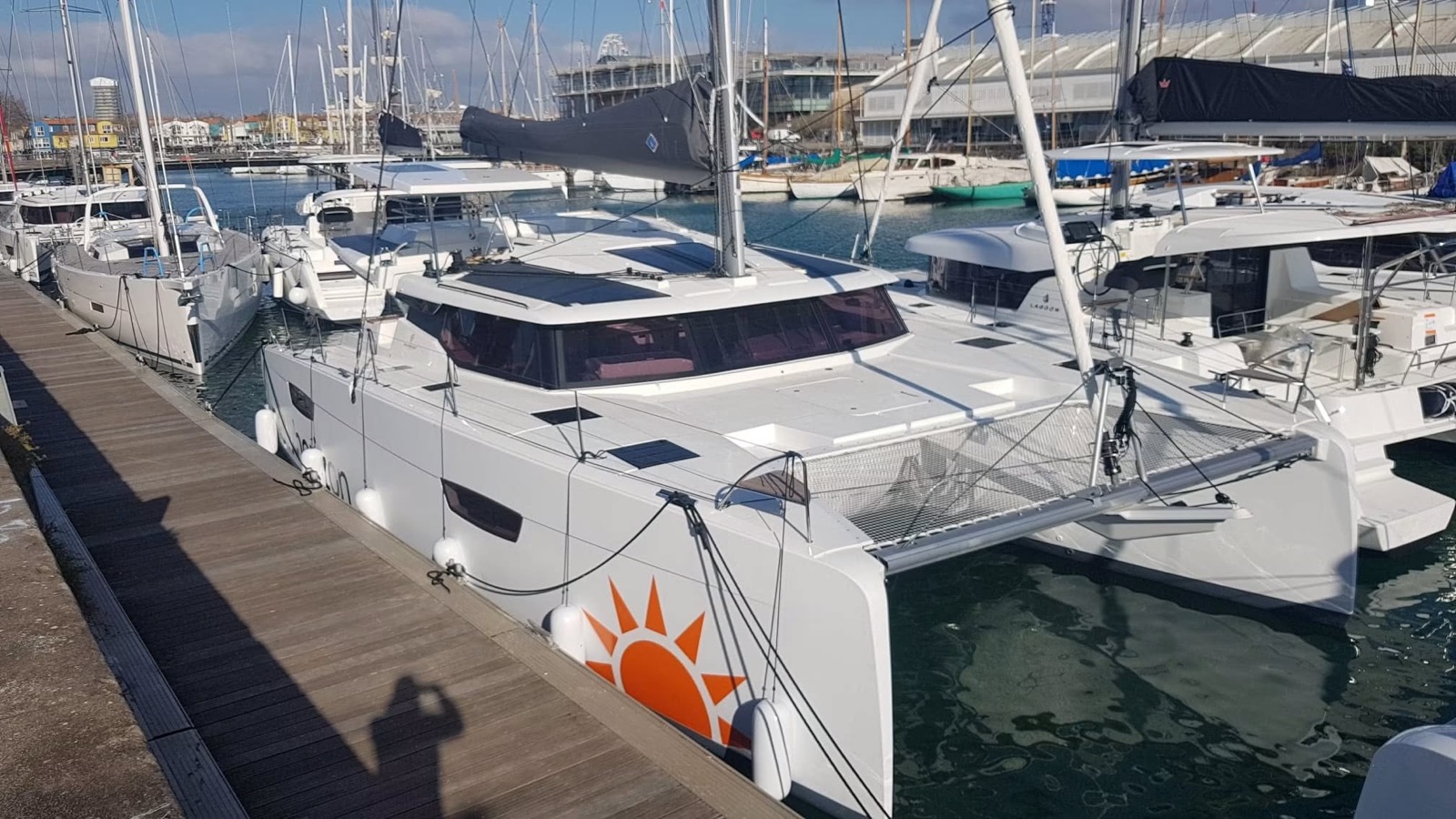
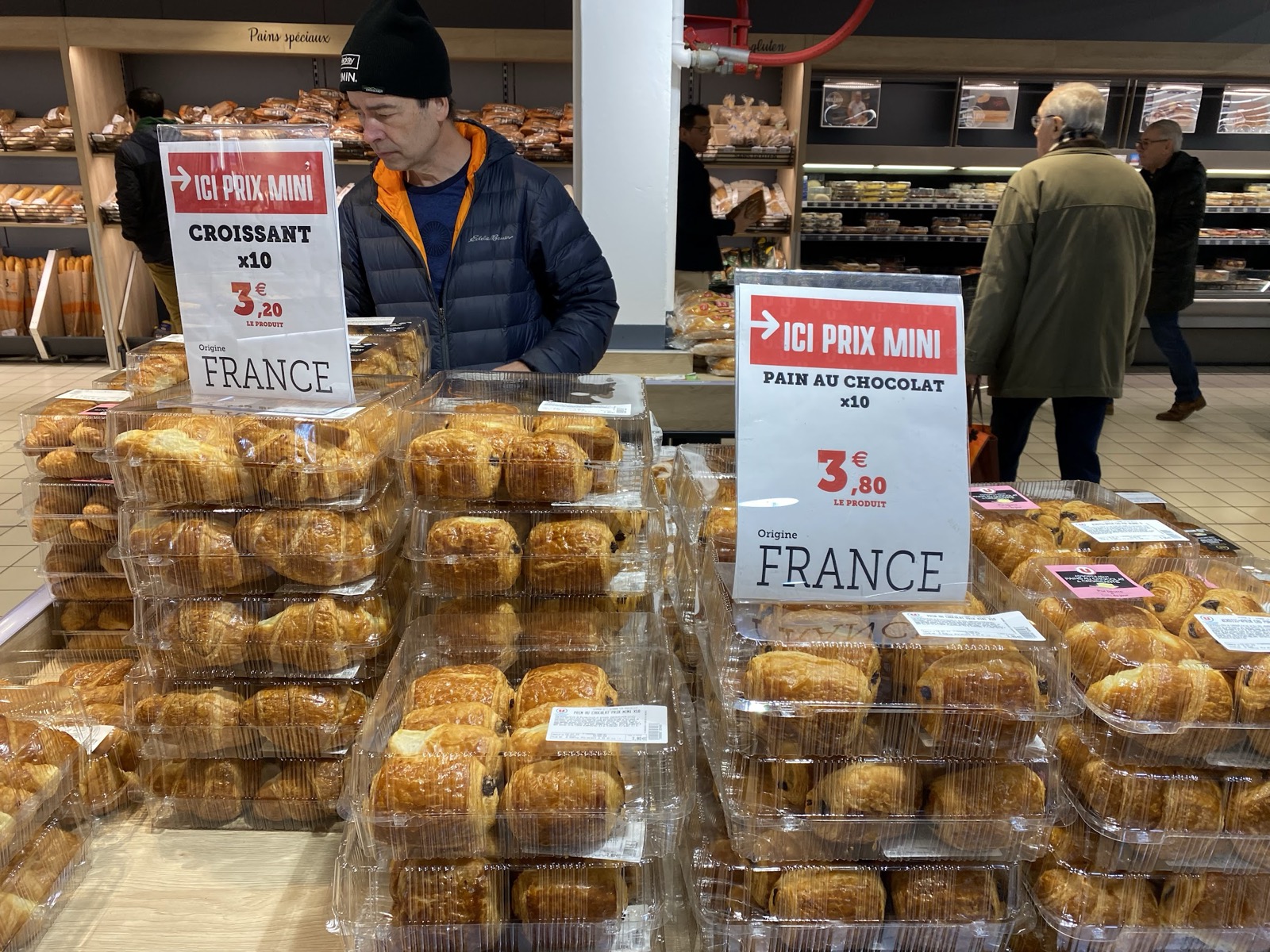
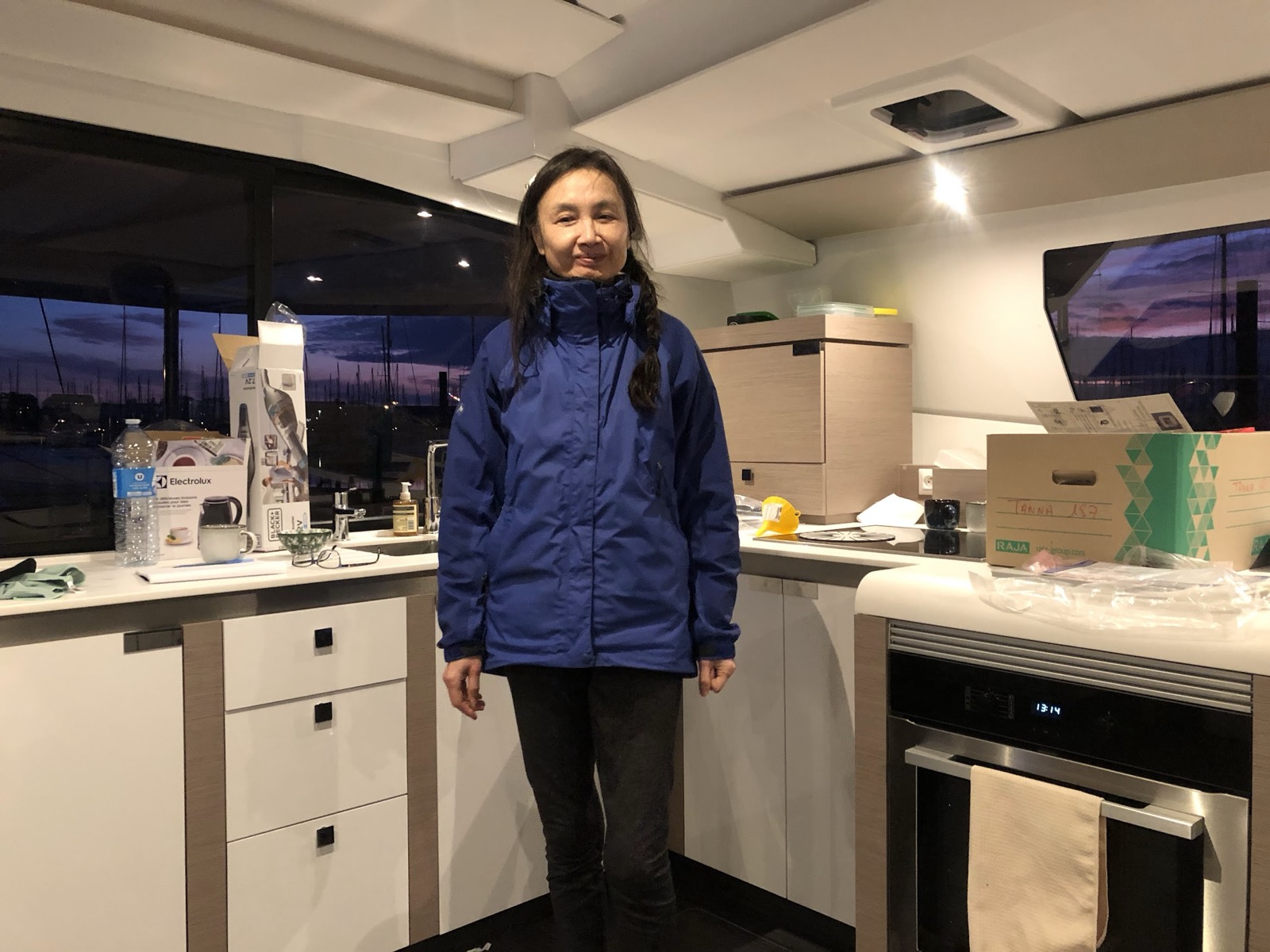
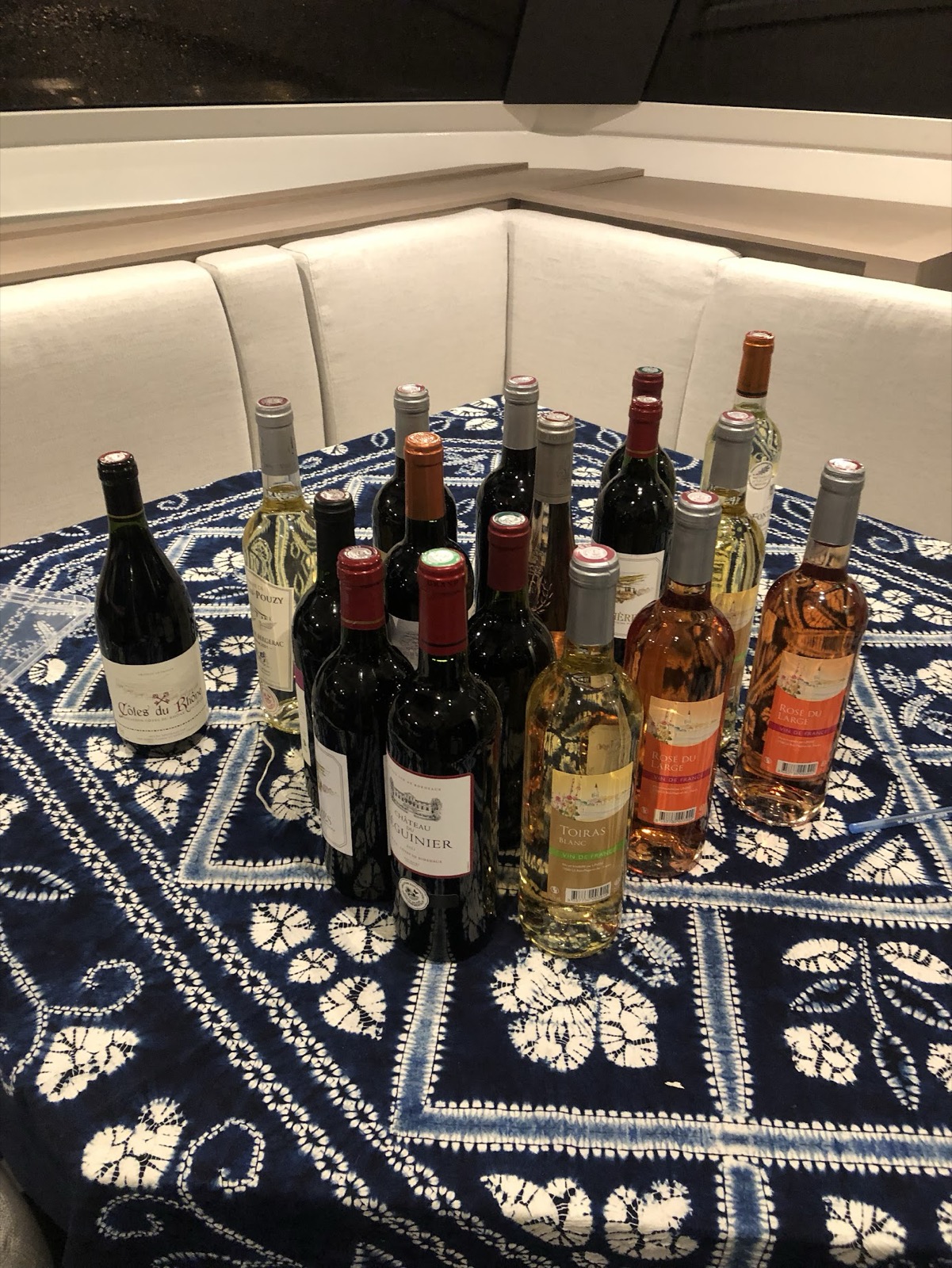
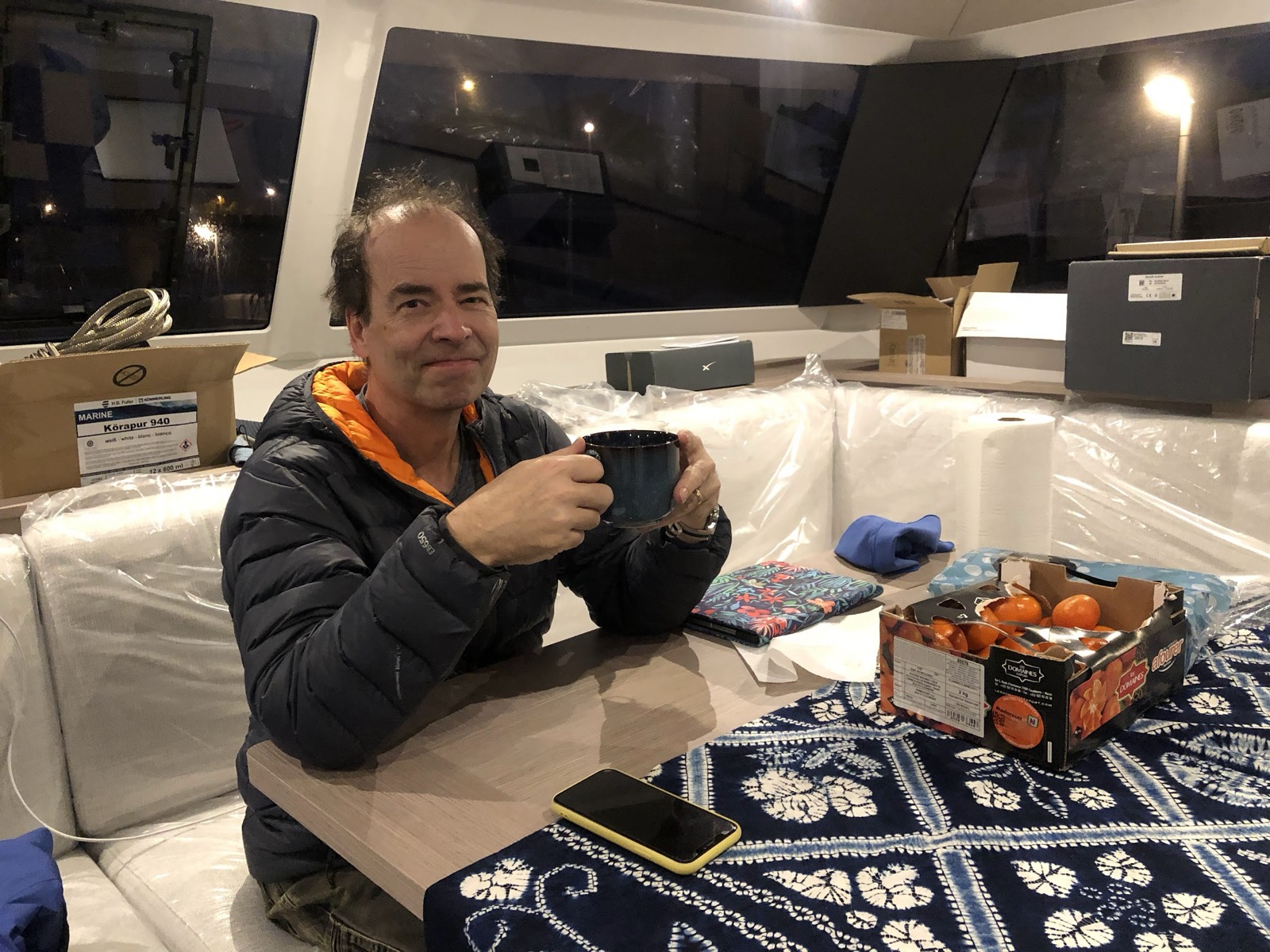
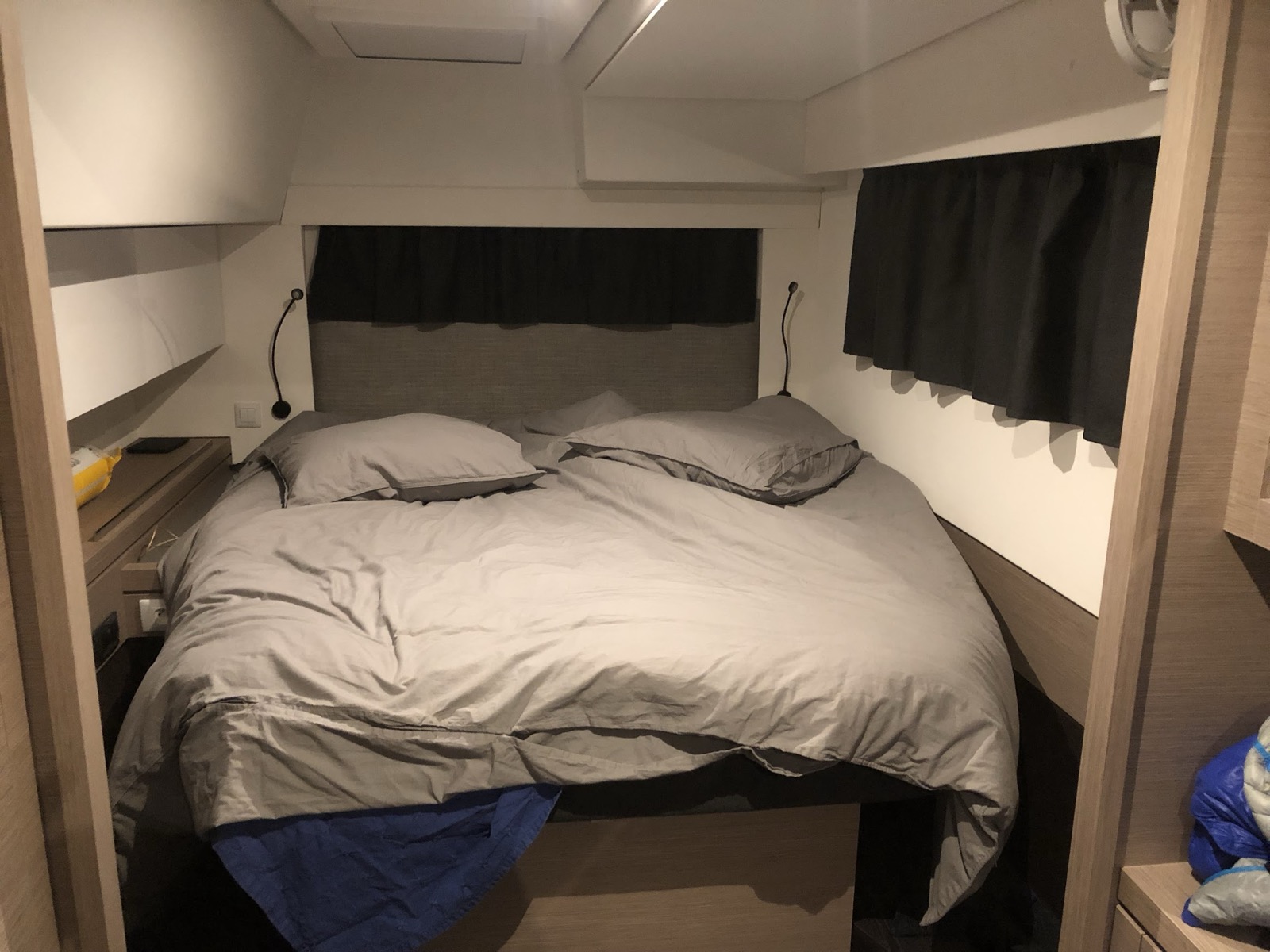
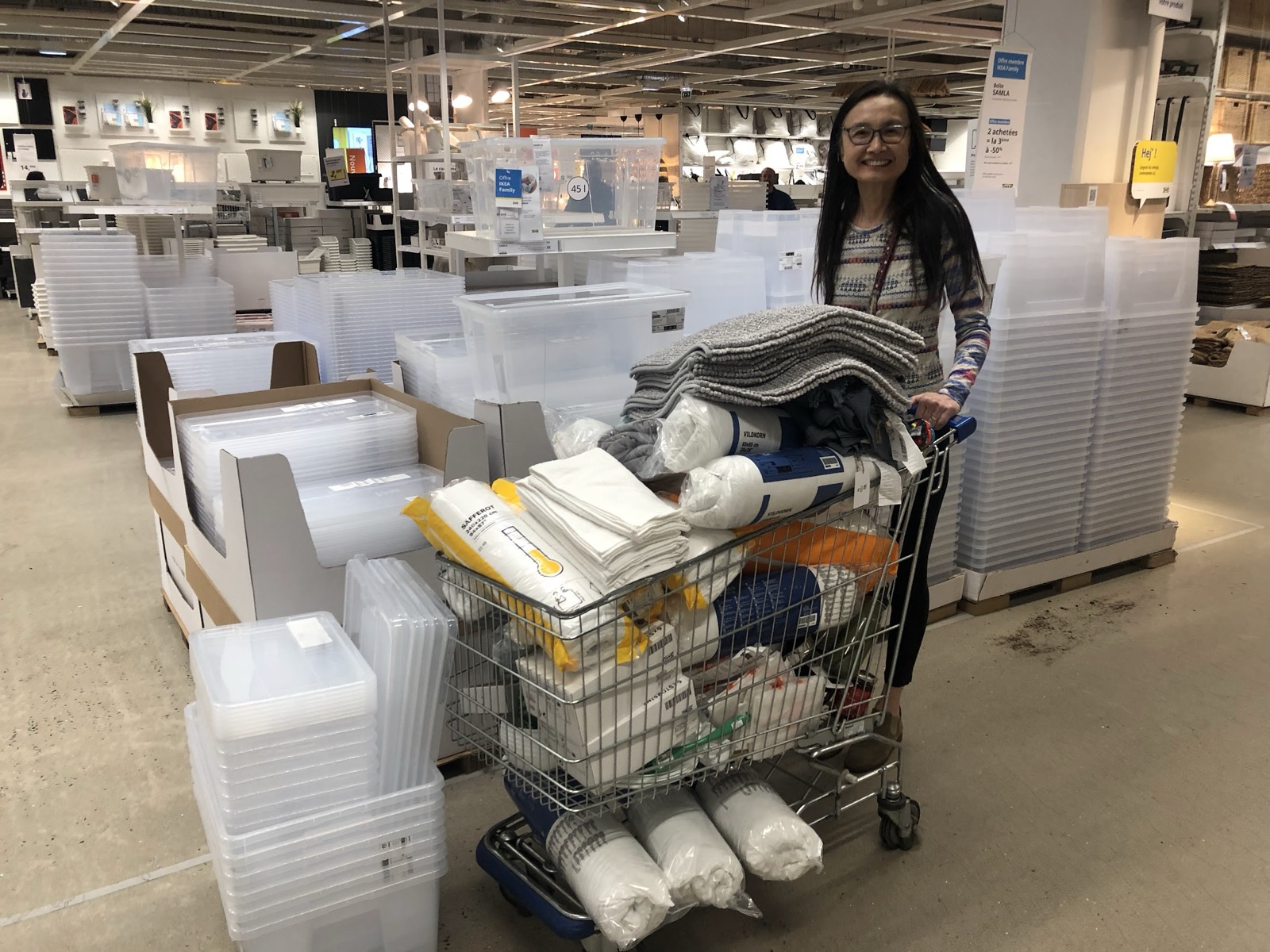
New Horizon on the hard before the mast was stepped, but with vinyl wrap applied First picture of New Horizon in the water Rong tries out the captain’s seat - note helm roof by SeaConcept The captain has his own shopping cart of IKEA items Or maybe he’ll just checkout the croissant selection Driving back from IKEA with the car loaded to the brim Organizing the galley Moulinex microwave purchased at Leroy’s in La Rochelle Making sure the wine cellar is stocked with the best 2 euro French wines Taking a break from unpacking - note settee still has plastic wrap After a night sleeping on bare mattress, we now had some bedding Our dinghy has arrived One of the cabin fire extinguishers Engine room halogen fire extinguisher We got the Steiner binoculars but without the heading gizmo Figuring out what line to get We looked at getting a passarelle (gangplank), but it takes up a lot of space and we wouldn’t actually need it until we got to the Med Self-inflating life vest EPIRB Refer to this flowchart to fix any boat issue