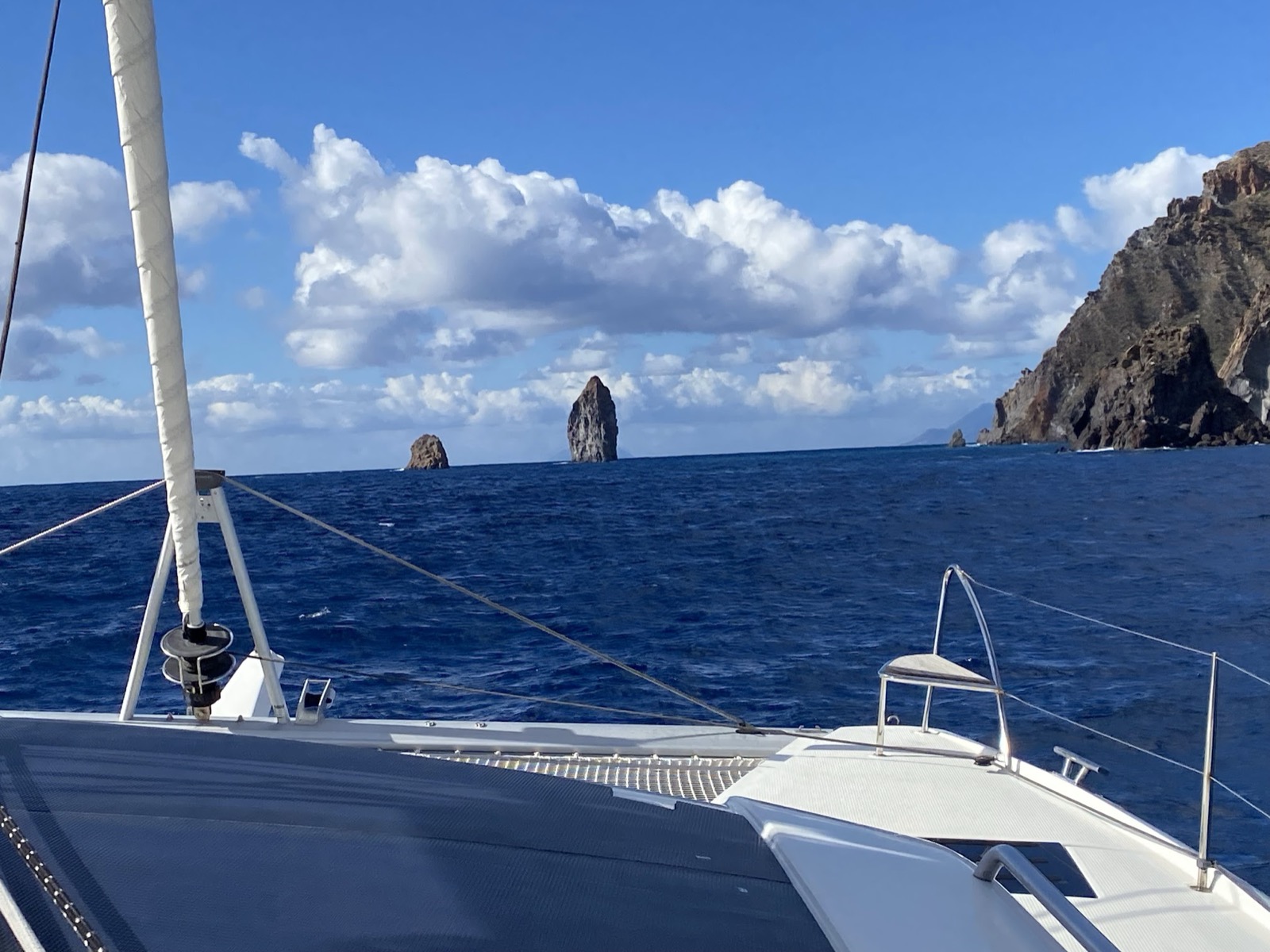
Leaving Milazzo we headed north to the Volcano Island, the most southern of the Aeolian islands. The English word for Volcano actually comes from this island (thought to be the home of the Roman god Vulcan). After a day passage from Milazzo we arrived in the late afternoon and anchored in a quiet harbor on black volcanic sand on the south side of the island. The forecast was for 30+ kt winds the next two days and on consideration the anchorage was not as well protected as we would like. So next morning we motored a few miles to the main harbor of Volcano where there was a mooring field (we were lucky – this was the last week it would be open for the season) that gave us a secure spot to wait out the storm.
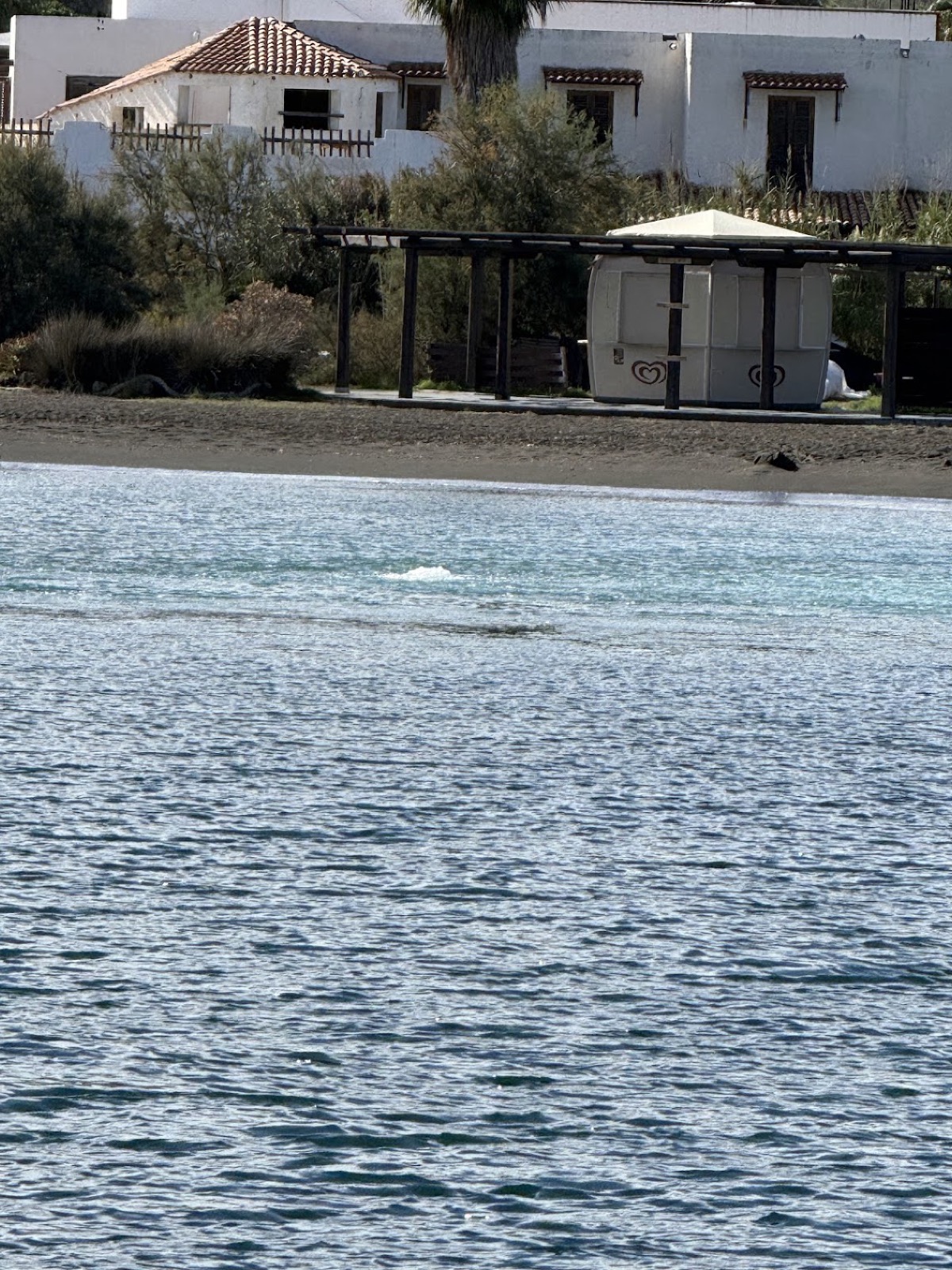
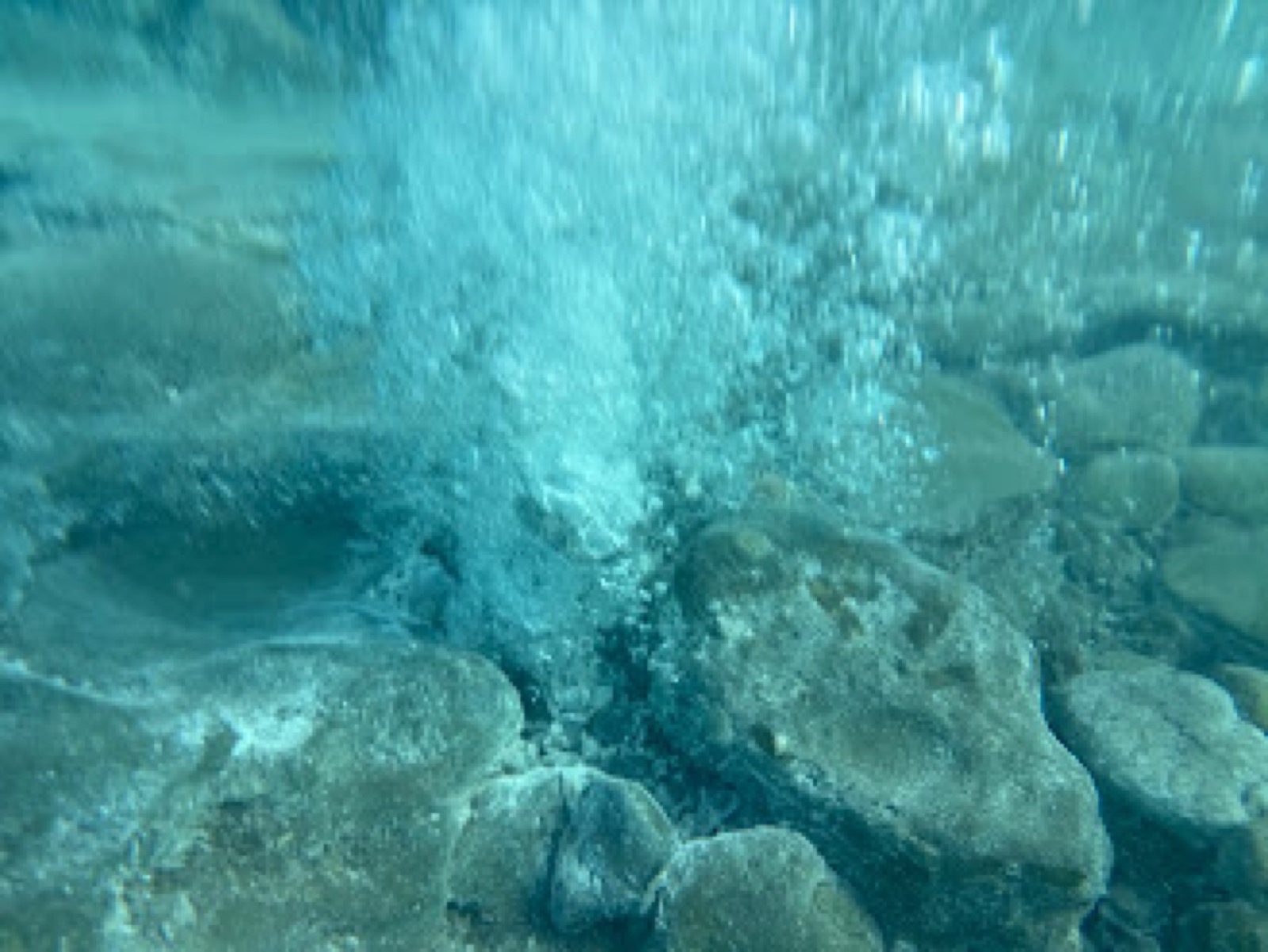
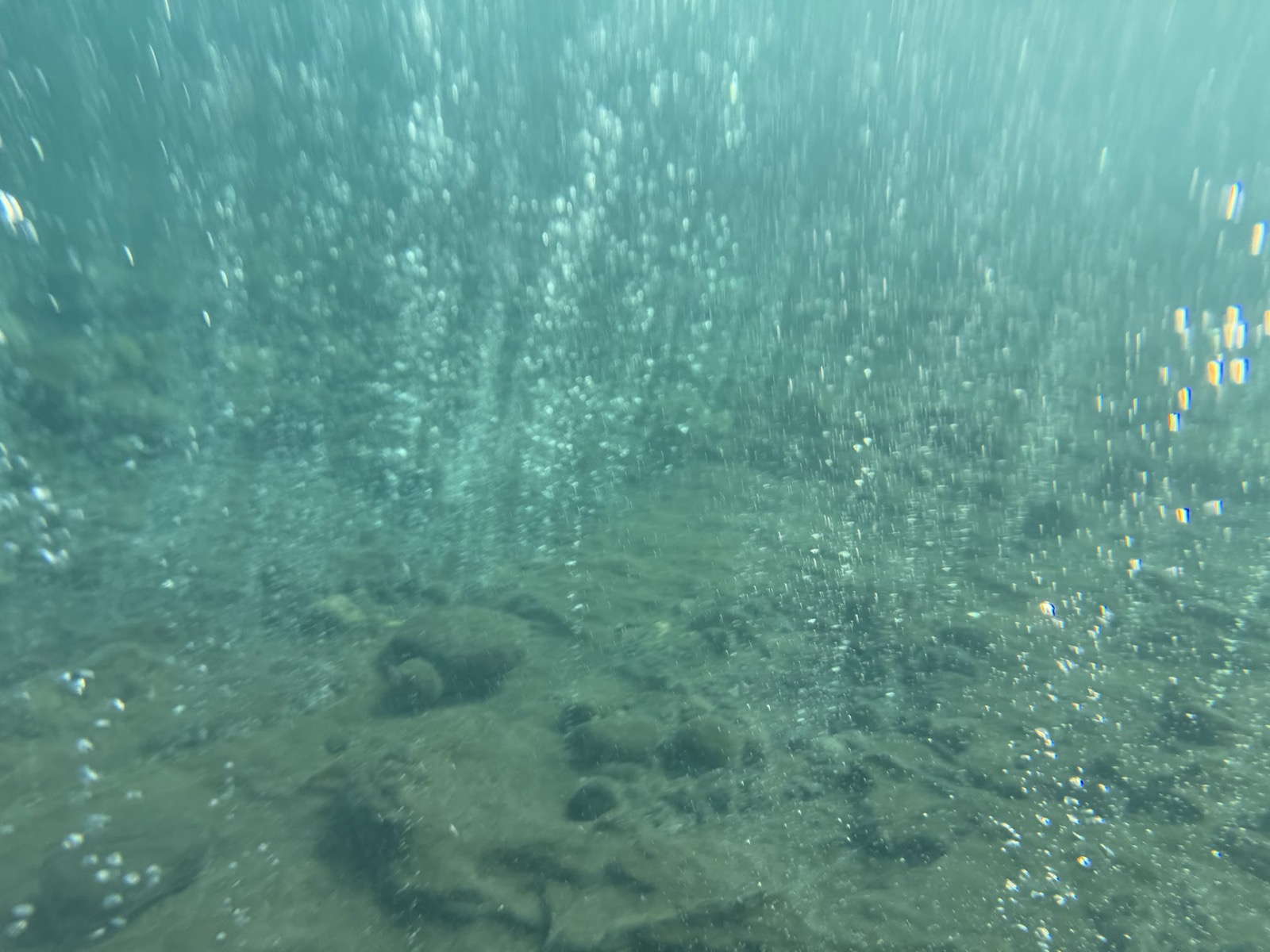
At the moorage field there was a distinct odor of sulfur (rotten egg smell) from the volcano, but after a few hours you don’t really notice it. We were moored conveniently close to bubbling gas vents and we got on our snorkeling gear to swim off the boat and go explore. Being the start of November, the water had a distinct chill (one of us was wise enough to wear a wet suit, the other not so much). Anyway it was a short swim towards the beach until we could see the gas bubbles rising up from the sea floor. Some areas had a slow trickle of bubbles, but others were like a kettle on full boil (the water around the vents was warm but not hot).
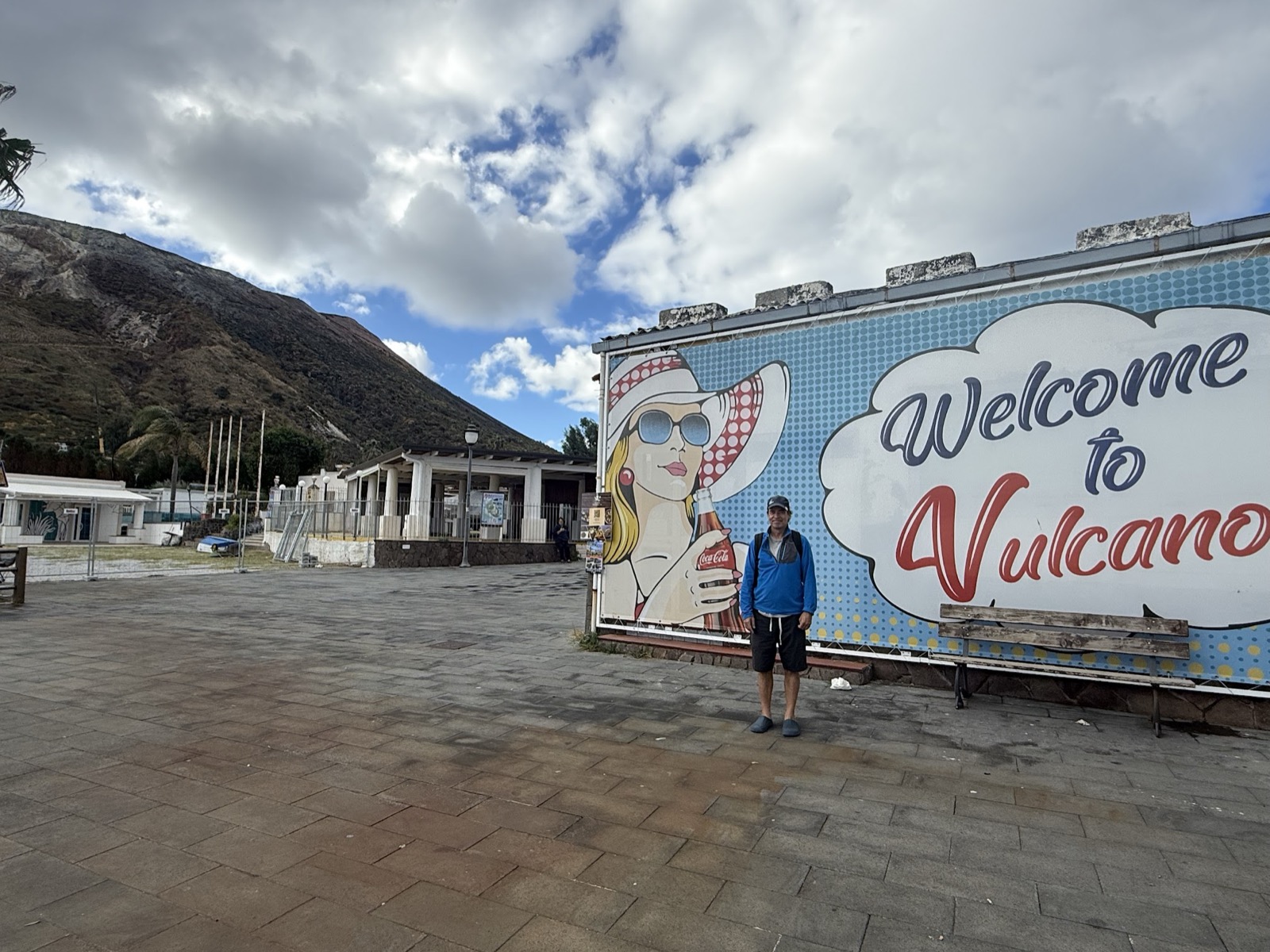
The next day in Volcano we just stayed onboard as the wind had really picked up. Finally the day after the wind had died down, but before leaving we had a walk around the town (the mooring operator provided a water taxi service so we didn’t need to set up the dinghy). We had a bite to eat at a cafe in town and bought some groceries at a small market. We considered a hike to the lip of the volcano (it is not too strenuous), but we were feeling a bit lazy and just explored the harbour area instead. Very close to town there is a mud bath, but unfortunately it had closed for the season the week before.
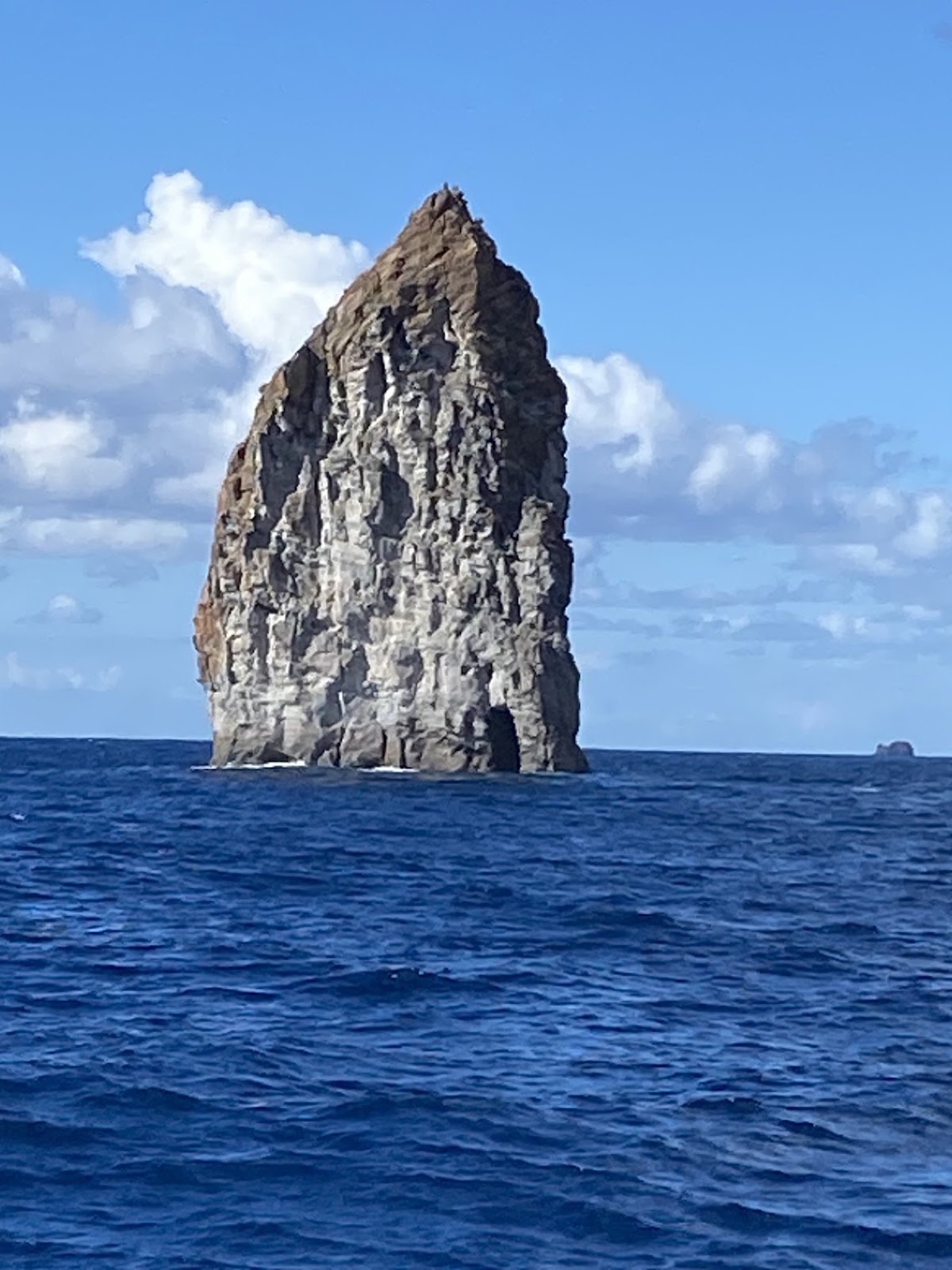
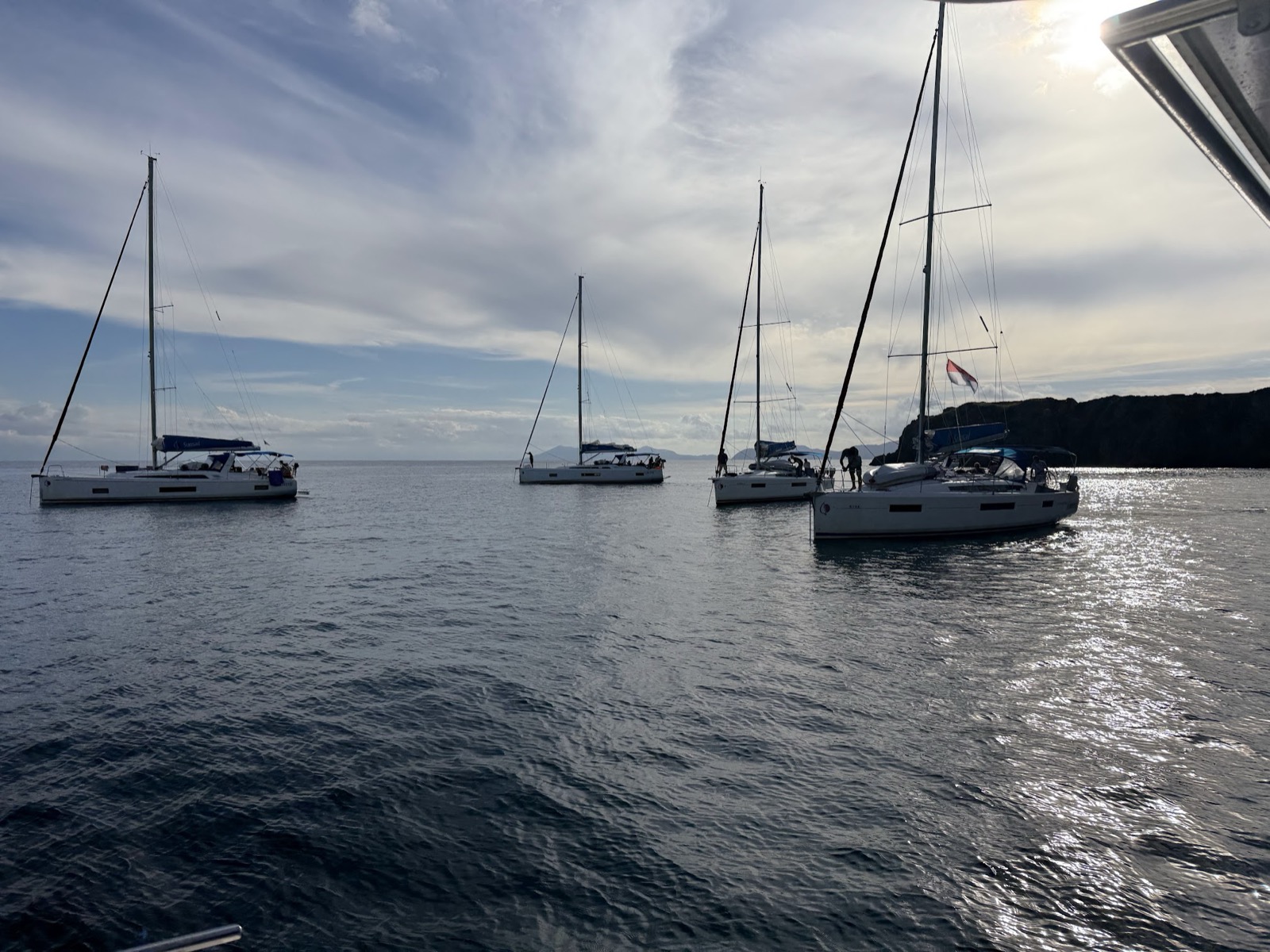
Back on the boat we motored a short way to the next (and largest of the Aeolian islands) island: Lipari. We didn’t stop but sailed past the impressive sea stacks near the island. On the west side of Lipari the waves were quite high and we had a bumpy ride till we passed the north end of the island and anchored in a small bay on Panarea Island. We had the anchorage all to ourselves till the next day, six charter boats joined us. It turned out that they had the same plan as us: to leave late the next day to see Stromboli at night. At the due hour we (New Horizon and charter boats) headed out motoring in light winds. To see the lava flow in Stromboli you have to go to the North side of the island (and not too close as there is a 2-mile exclusion zone to protect boaters in case any volcanic rocks head your way).
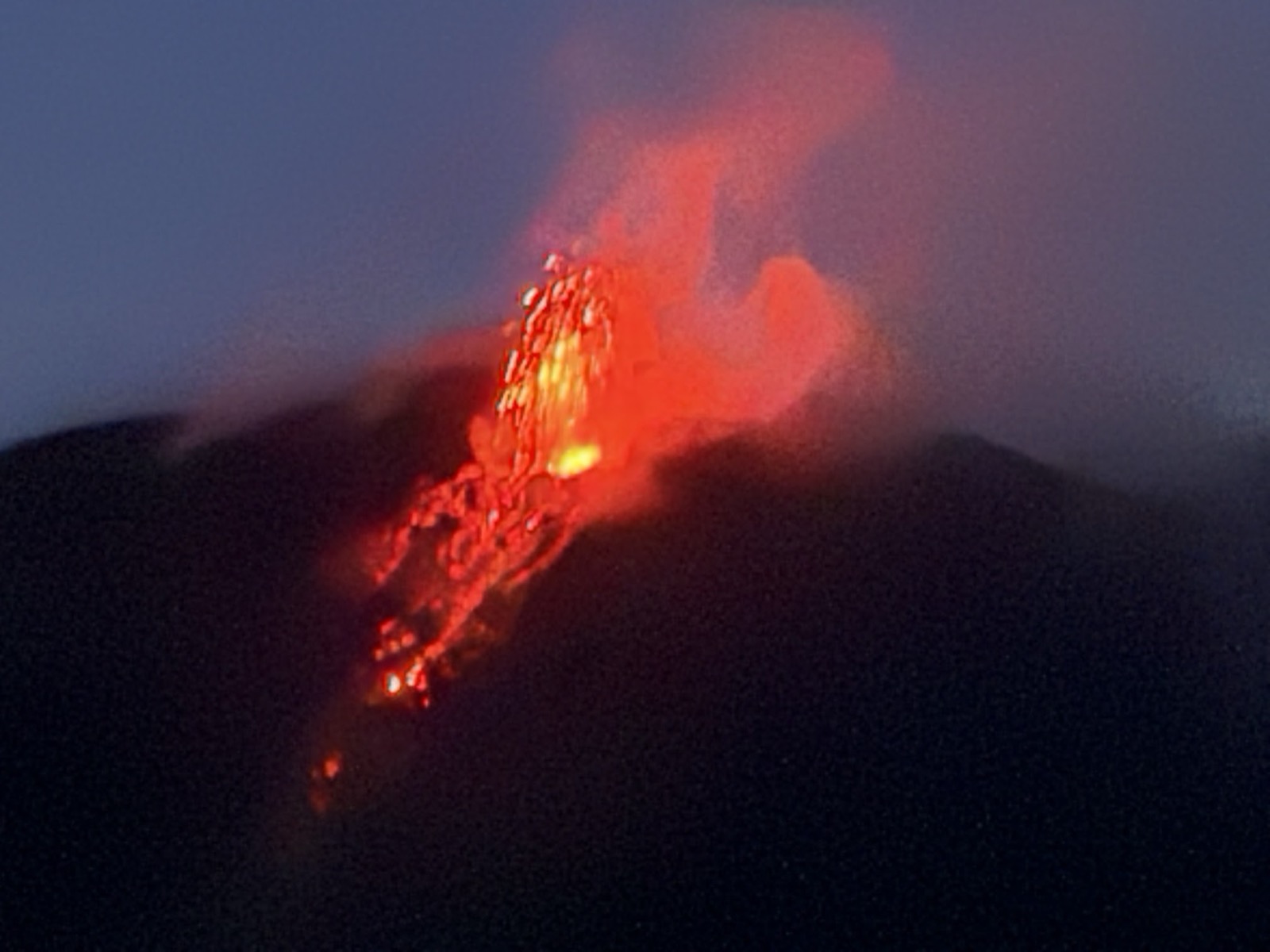
We arrived just as it was getting dark and were quite thrilled to see the red lava on top of the mountain. There would be quiescent periods followed by outbursts as you could see the lava thrown up. This was just an average day for Stromboli, but it was still quite impressive. The only challenge was being careful to not hit any of the other boats in our flotilla in the dark (none of them had AIS). With collisions averted and the wind filling in from the east, it was time to turn the boat around to start our return passage to Tunisia, so we raised sails and started on the long trip back to our winter base.
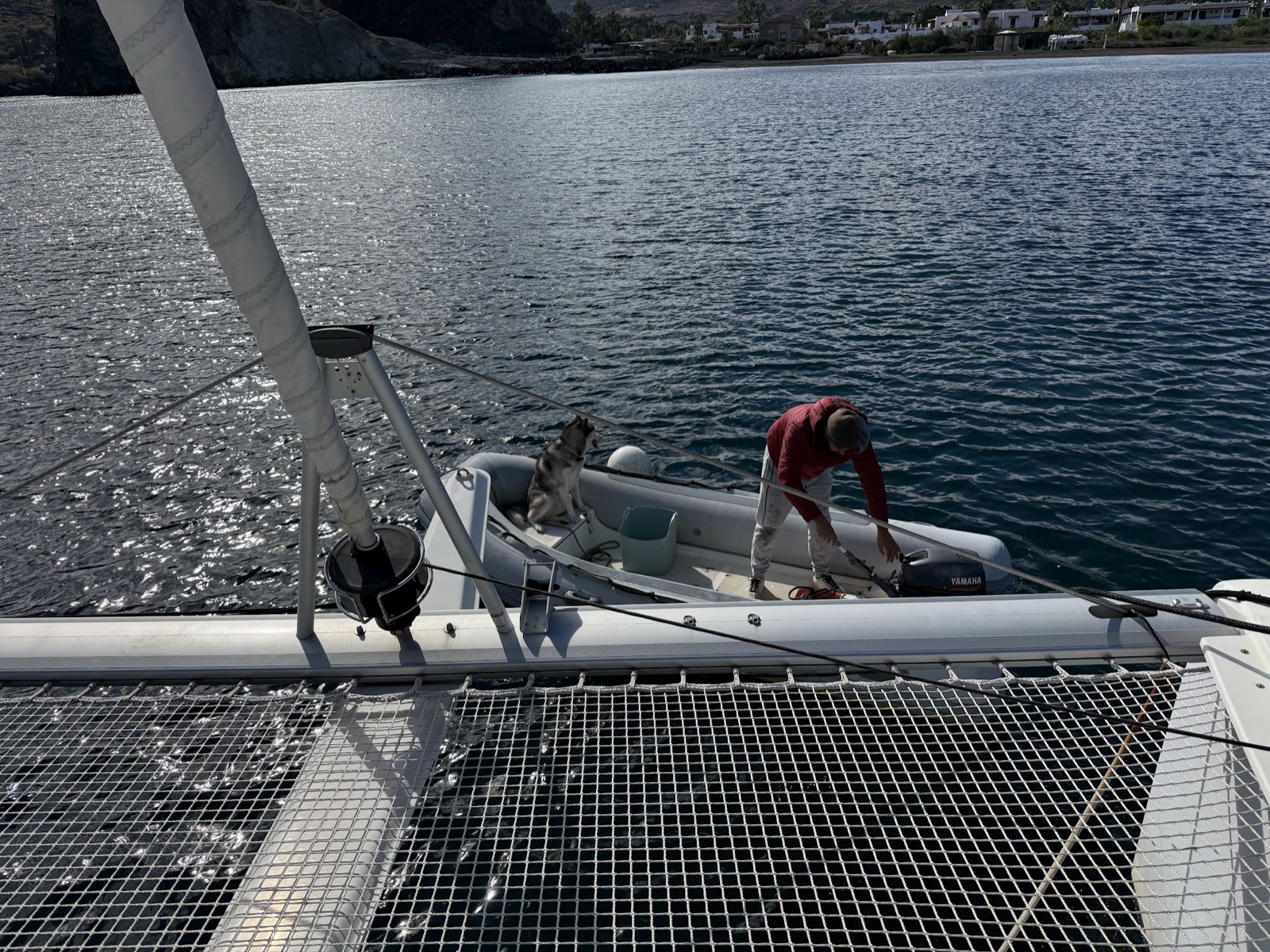
Mooring field operator helps a charter boat tie up Happy not to have to deal with attaching the mooring lines ourselves From our mooring we can see the water bubbling from underground vents Underwater view of the vents This area had many streams of bubbles This spot had really large bubbles Walking around the village in Volcano island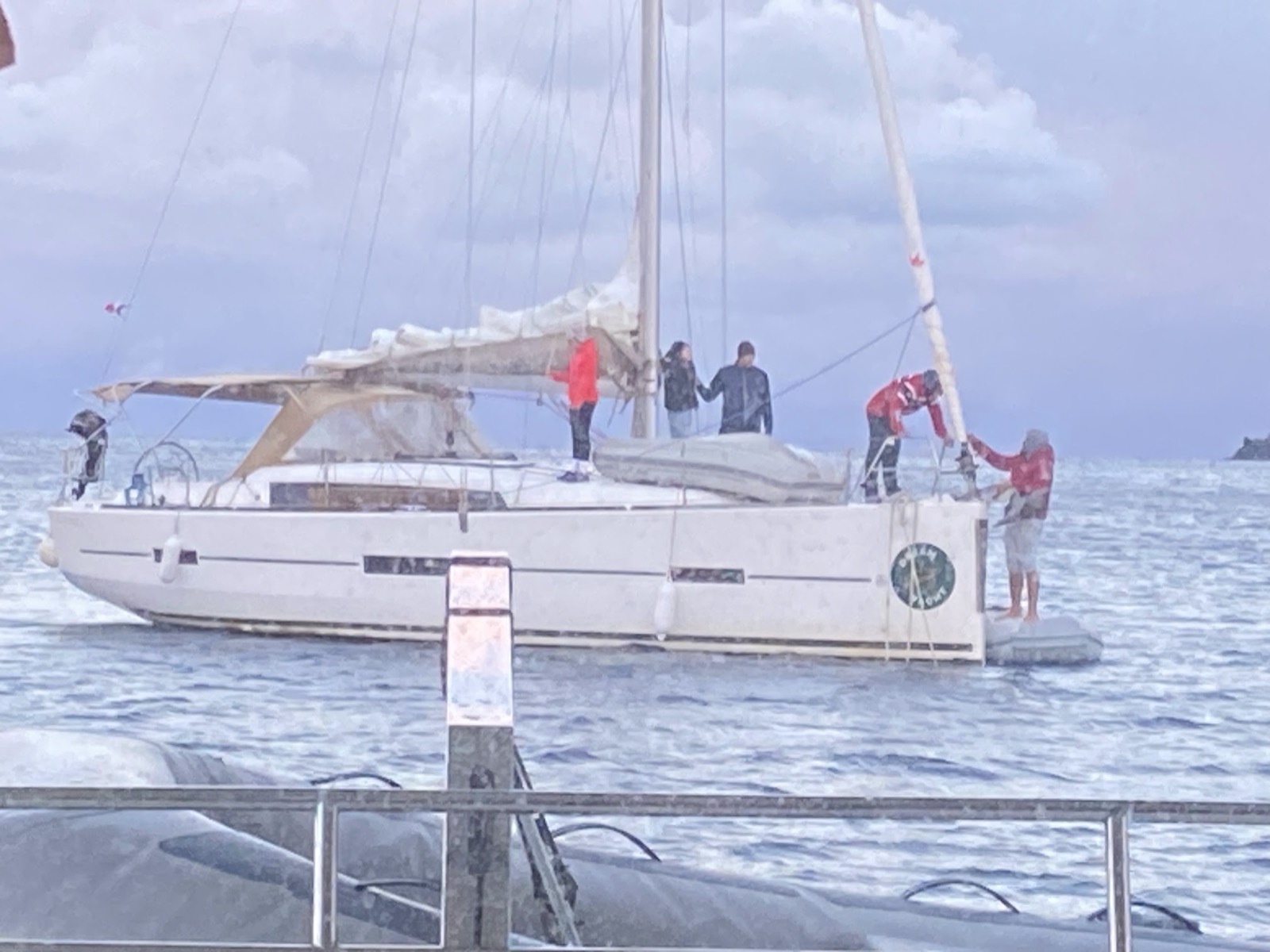

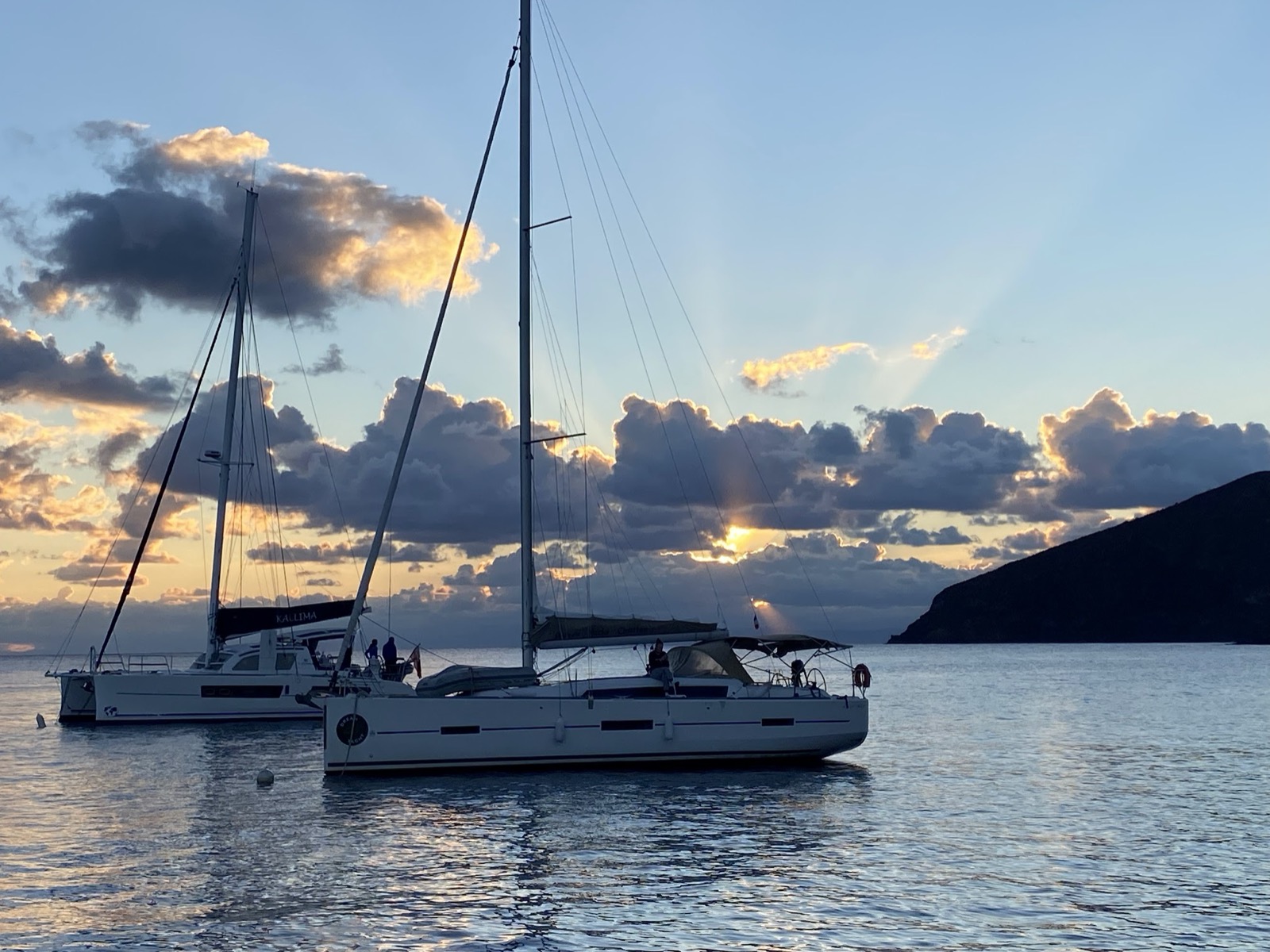
In Panarea we were joined by seven charter boats
The mud bath of Volcano island (sadly closed for the season) Lipari’s largest seastack Sailing past Lipari A bunch of boats joined our quiet anchorage in Panarea Island They had the same plan as us - late sail toward Stromboli to see the Volcano at night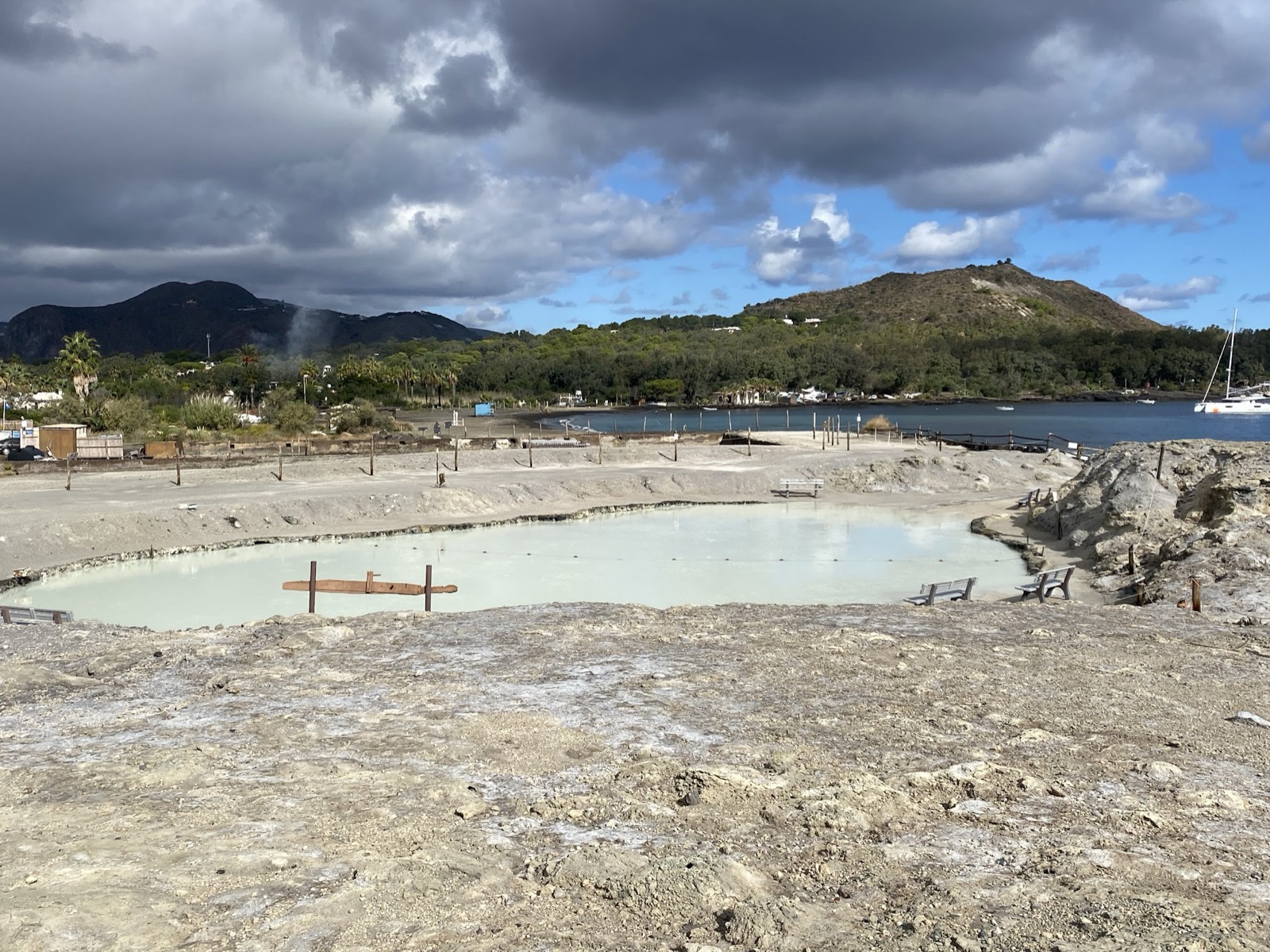
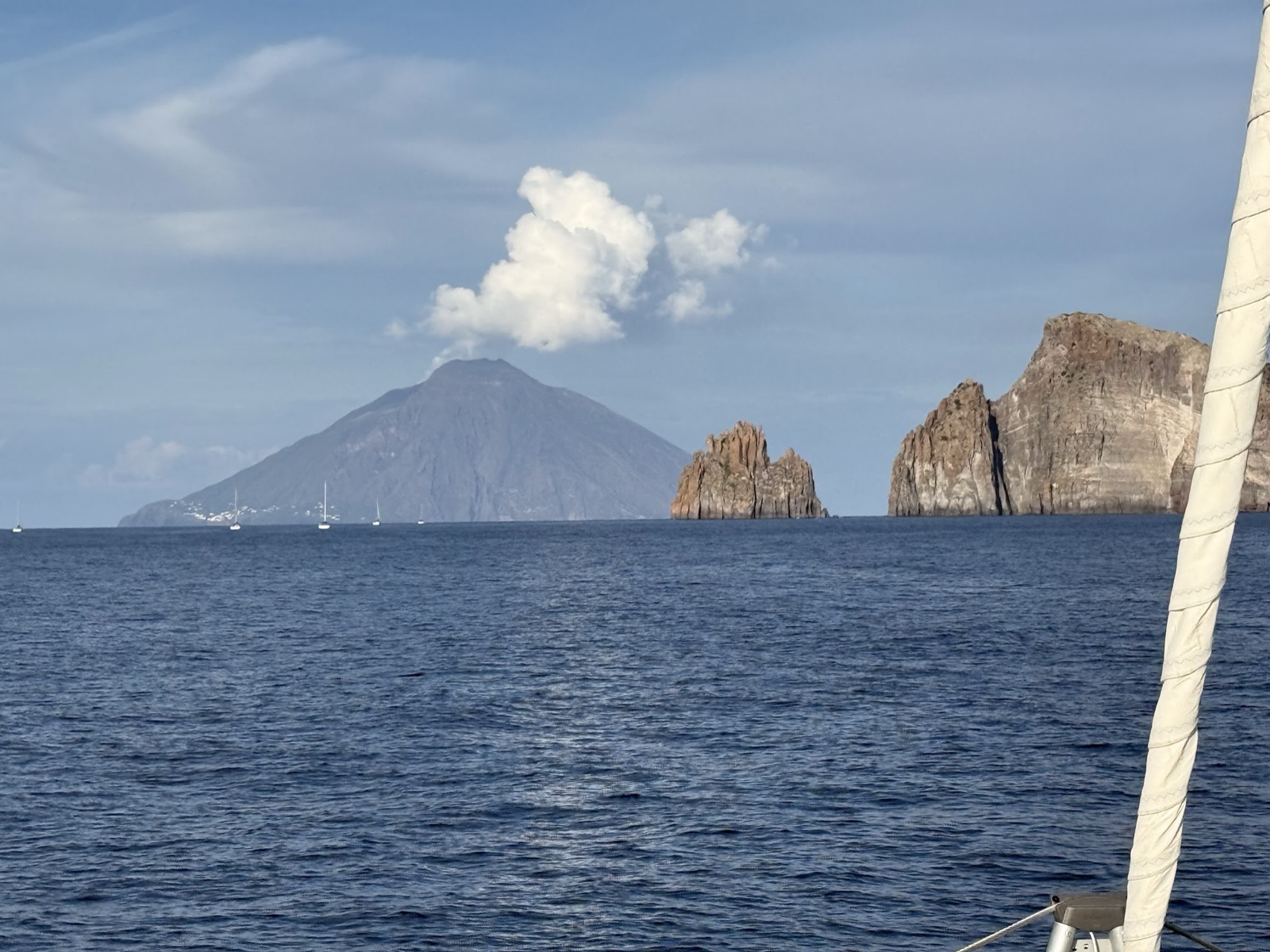
Stromboli Our first view of the fire on Stromboli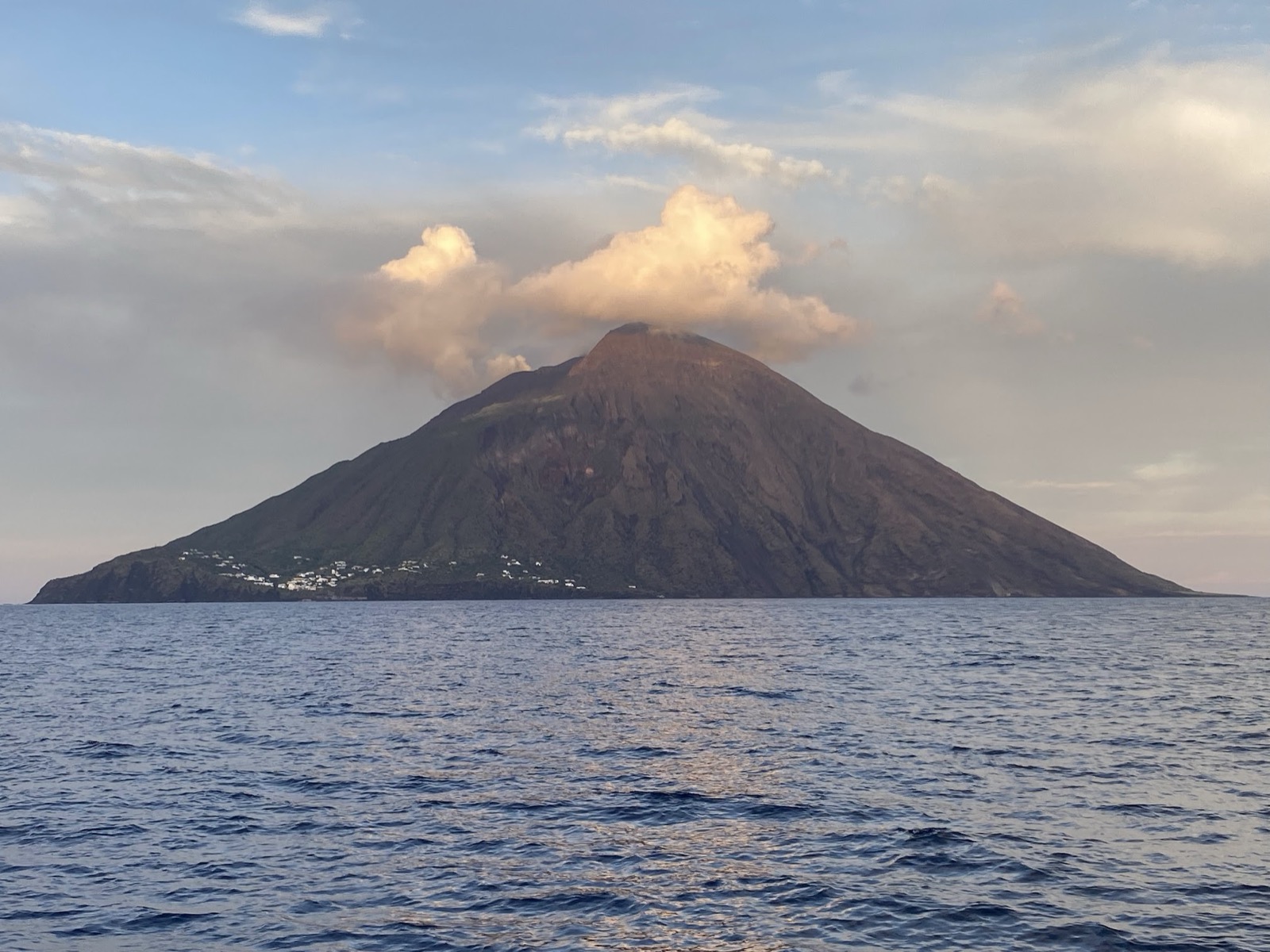
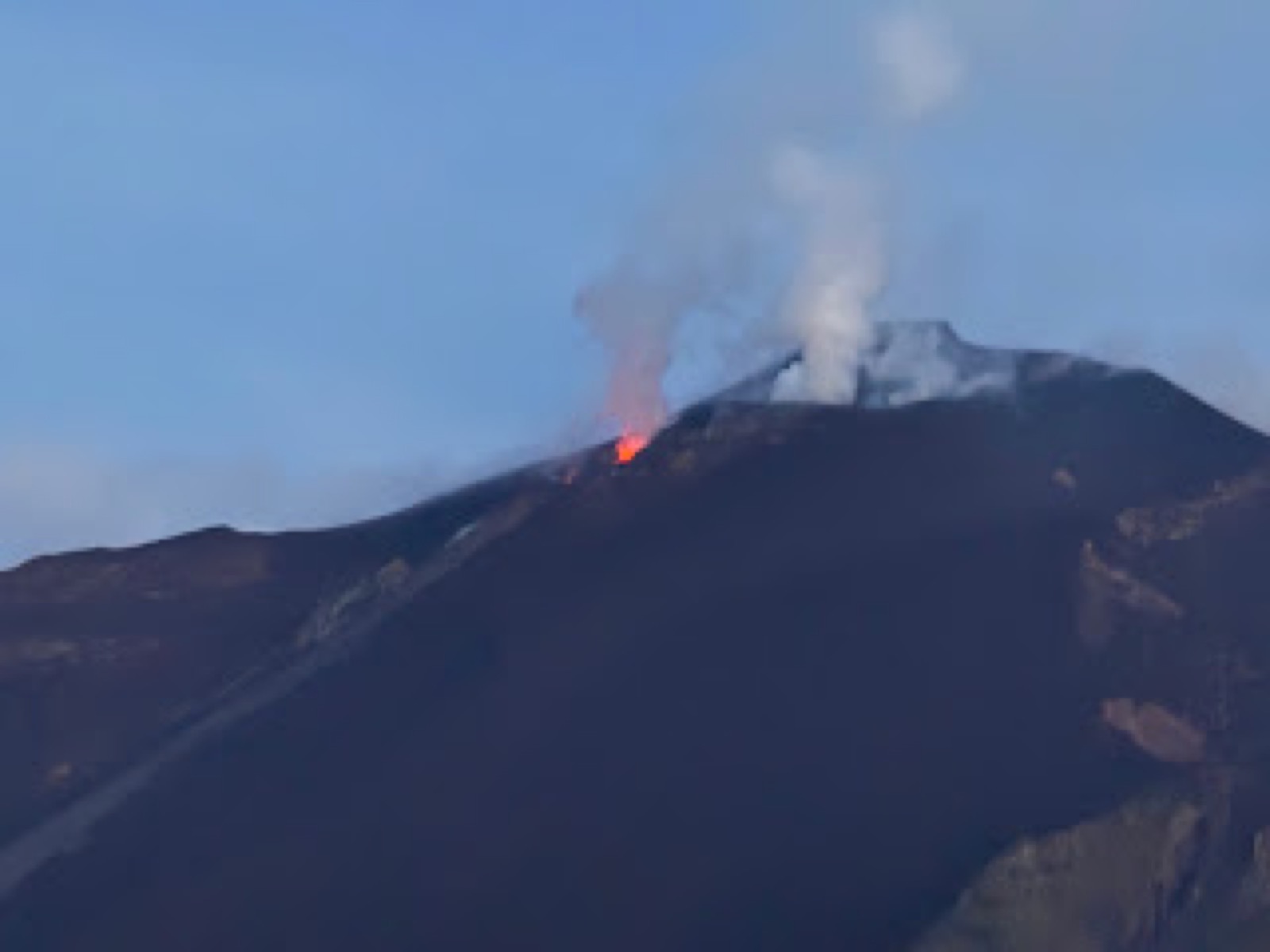
Close up view of Stromboli’s peak One of the larger eruptions we saw that night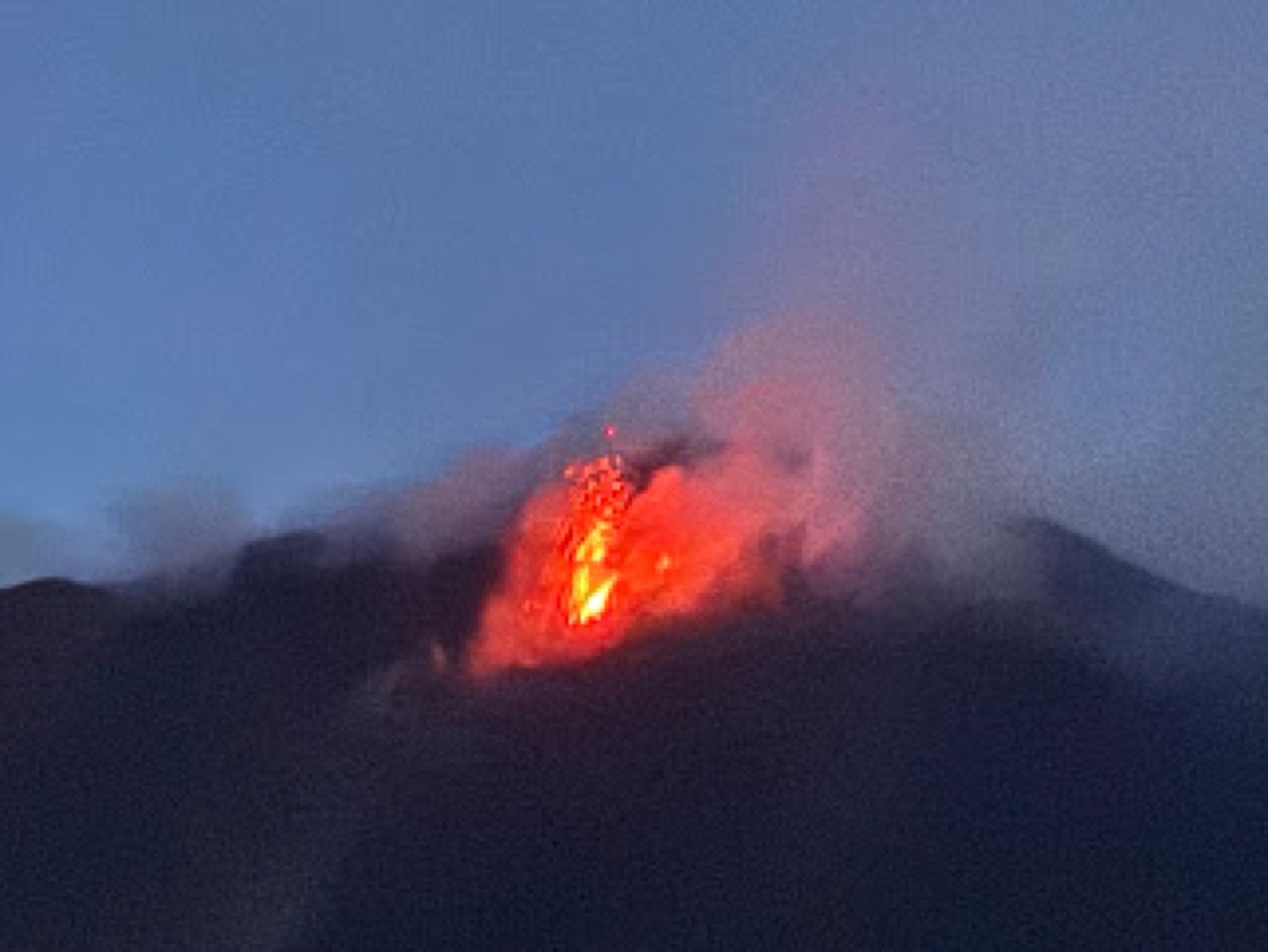
logbook 2026-11-04 to 2026-11-07